
How to Stop a Border Collie Puppy Nipping at Ankles
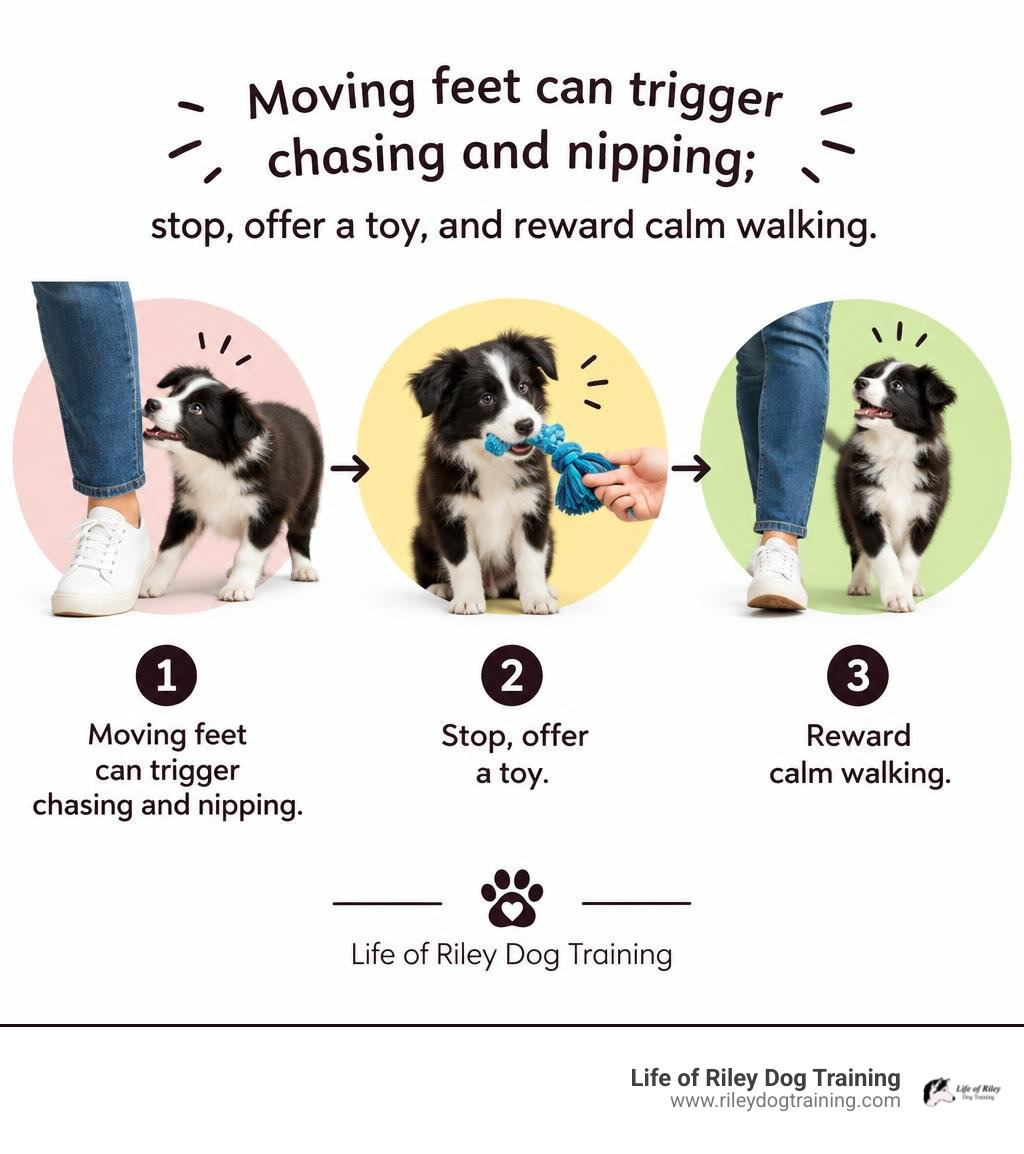
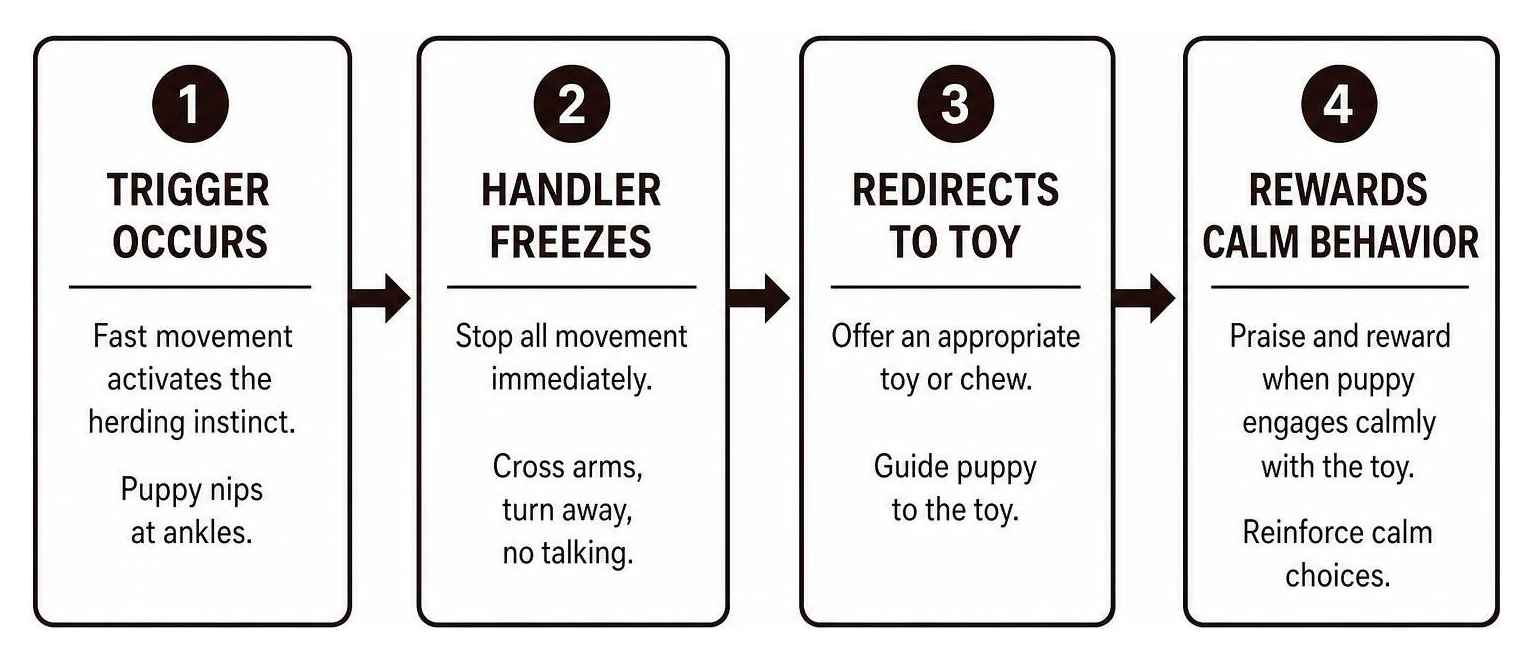
To stop a Border Collie puppy nipping at ankles, stop moving when the nipping starts. Offer a toy, then reward your puppy for walking beside you without biting. Avoid pulling your feet away quickly, which can turn the moment into a chase game.
Moving feet can trigger a herding puppy's urge to chase and nip. That does not automatically mean aggression. If your puppy keeps going after your feet, calmly step behind a gate for a brief break. Short training sessions, play, and rest can help make polite walking easier to learn.
Why Is Your Border Collie Puppy Nipping Ankles?
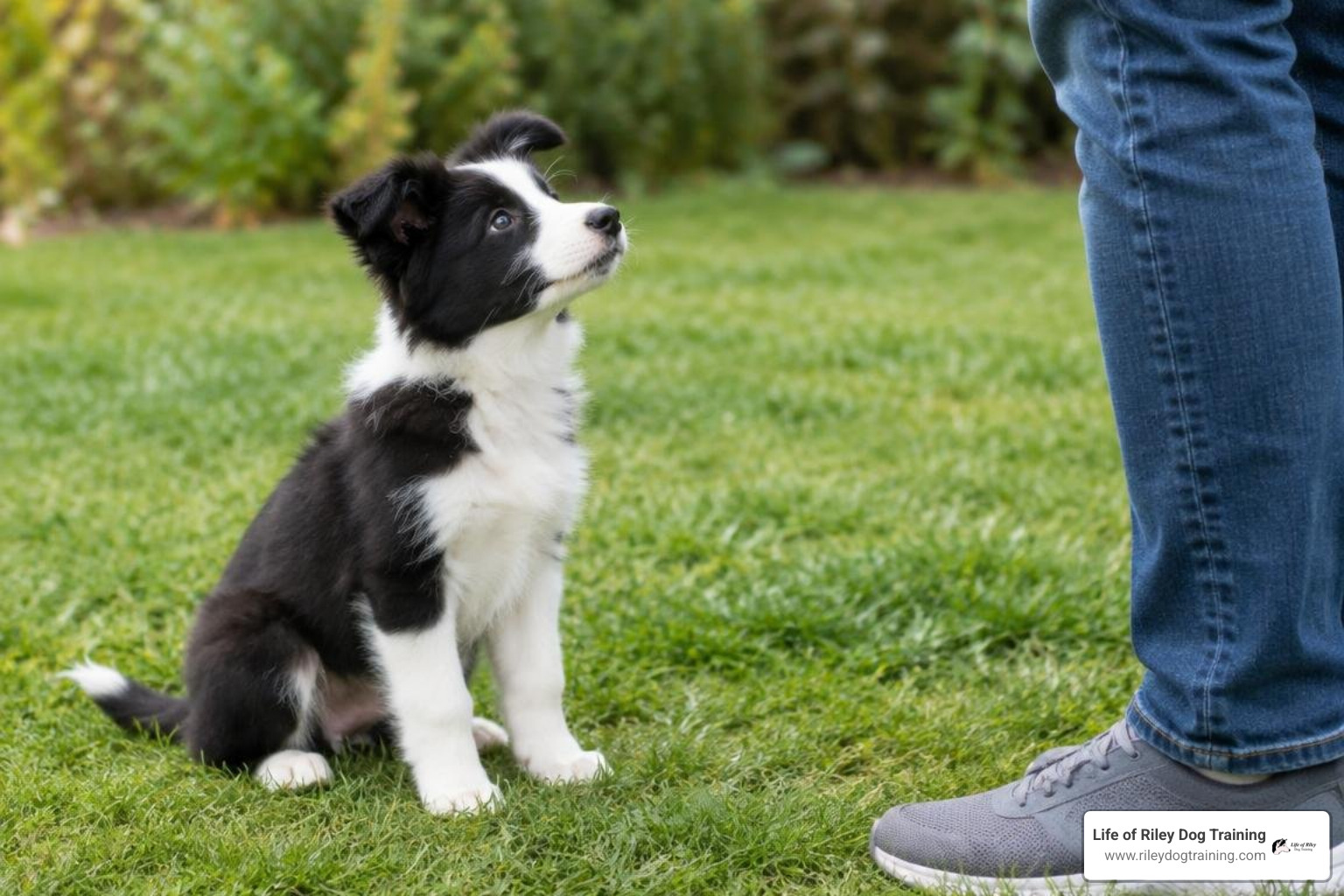
Living with a young herding dog can feel like sharing your hallway with a tiny, fuzzy alligator. You take a step toward the kitchen, and suddenly sharp puppy teeth clamp onto your socks, pant legs, or bare heels. While this behavior is understandably frustrating, it helps to understand that your puppy is responding to deep biological wiring.
Border Collies possess an extraordinary sensitivity to visual motion. In their minds, anything that moves quickly across their field of vision demands immediate attention and control. When you walk, your feet, pant cuffs, and shoes create a rhythmic, low-to-the-ground motion that acts as a natural trigger for their working instincts.
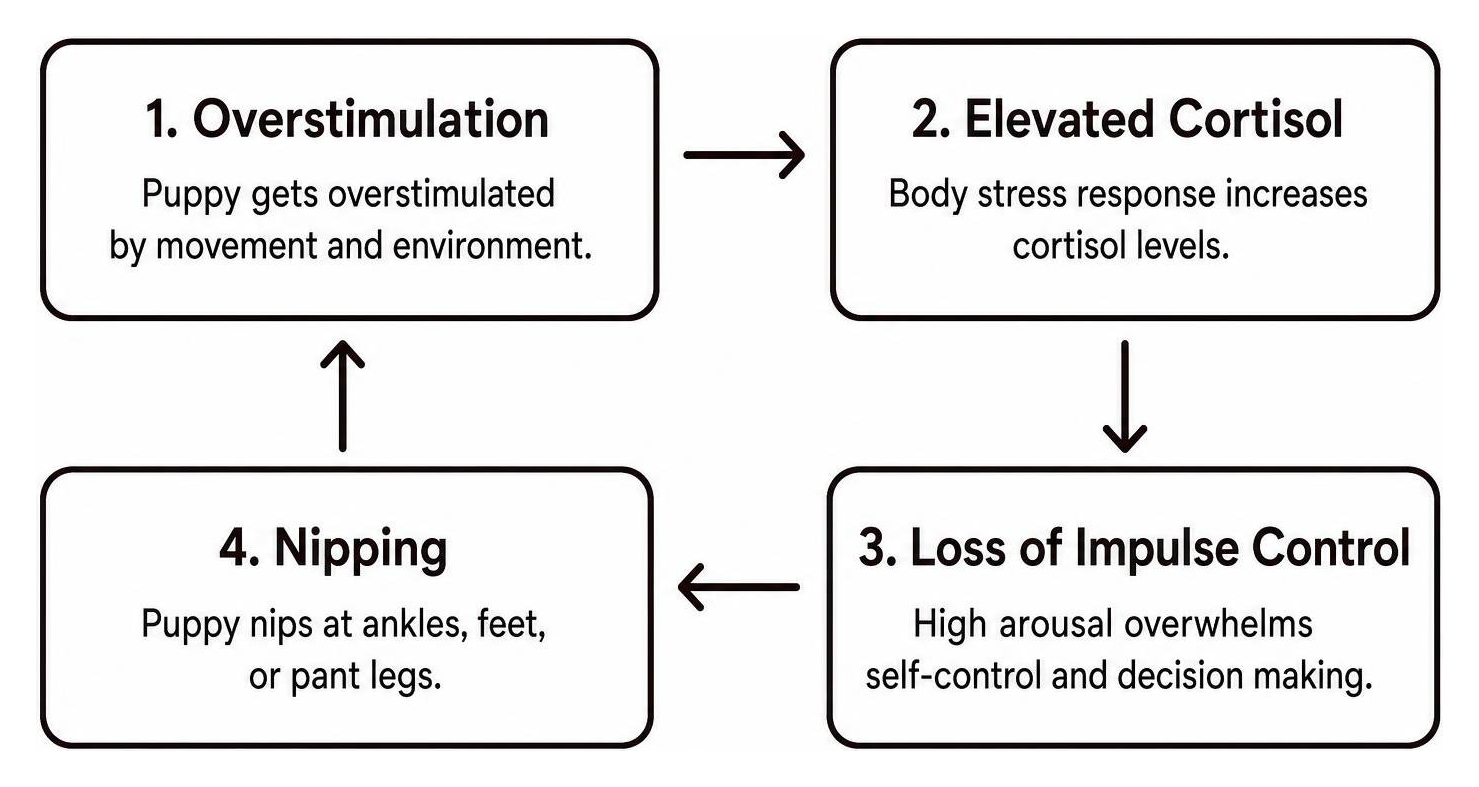
When this instinct kicks in, puppies often cross their arousal thresholds quickly. Their nervous system becomes flooded with excitement, causing their budding impulse control to vanish. Learning how to teach puppy bite inhibition early on gives your puppy the self-control they need to pause and think before reacting with their mouth.
Herding Genetics vs. True Aggression
It is completely natural for new owners to worry that ankle biting is an early sign of viciousness or malice. We want to reassure you that dealing with a border collie puppy nipping ankles is almost never a display of true aggression.
Border Collies were systematically bred for generations along the Anglo-Scottish border to control the movement of vast flocks of sheep across rugged hillsides. Working herding dogs manipulate movement through a specialized sequence of behaviors: orienting, stalking, chasing, and grabbing or heel-nipping to steer livestock. Breeds like Australian Cattle Dogs (often called Heelers), Corgis, and Border Collies use this low nip to turn stubborn animals.
Your puppy does not see you as prey, nor are they trying to harm you. Instead, they are practicing their ancestral trade on the only moving objects available inside your home: your feet, your bathrobe, and running children. Because young puppies also use their mouths for tactile exploration and social play, this hardwired motor pattern combines with typical puppy playfulness to create a persistent habit. Reacting with loud yelps or physical punishment often backfires, as high-drive puppies view frantic human reactions as exciting feedback that fuels the game.
Overtiredness, Cortisol, and Dysregulation
While genetics explain why ankles are the target, emotional regulation explains the intensity. A huge percentage of extreme nipping episodes happen because a puppy is chronically overtired.
Puppies need between 16 and 20 hours of quality sleep every day. When young dogs miss out on vital rest, their bodies experience sensory overload. An under-exercised or overstimulated puppy experiences elevated cortisol levels, creating a biological feedback loop of arousal, reactivity, and behavioral dysregulation.
When your puppy gets the evening "zoomies," darts around barking, and latches onto your pant legs with wild eyes, they are rarely asking for another mile-long walk. More often, they are having an overtired toddler tantrum. Providing quiet, dark spaces for enforced naps helps clear that stress hormone buildup and restores their ability to self-regulate.
Step-by-Step Training to Stop Ankle and Heel Chasing
Teaching your puppy that feet are not herding targets requires clear communication, calm handling, and rewarding alternative choices. Modern behavioral science shows that humane, reward-based methods create long-term emotional stability without creating fear or defensive behaviors. You can read more about how positive reinforcement transforms canine learning in our guide to our philosophy for dog training.
When working with intelligent herding breeds, we rely on clear marker cues, such as a crisp clicker or a verbal marker like "yes," paired with high-value rewards like small pieces of chicken or string cheese. This approach aligns directly with veterinary behavior recommendations for ethical handling, which emphasize setting up the environment for success and reinforcing desired responses.
Stopping a Border Collie Puppy Nipping Ankles on Walks
To resolve foot chasing, you must change how you react the second teeth make contact with your shoes. Use this structured approach to turn chaotic walks into calm strolls:
- Practice the "Be a Tree" technique: The moment your puppy lunges or nips at your heels, freeze completely. Lock your ankles together, cross your arms over your chest, and look up away from the puppy. When you stop moving, the chase game immediately loses its fun.
- Withhold attention until calm: Avoid scolding, pushing the puppy away with your hands, or pulling your legs back. High-drive working dogs view physical resistance as interactive play. Wait in silence until all four paws are on the floor and the mouth disengages from your clothing.
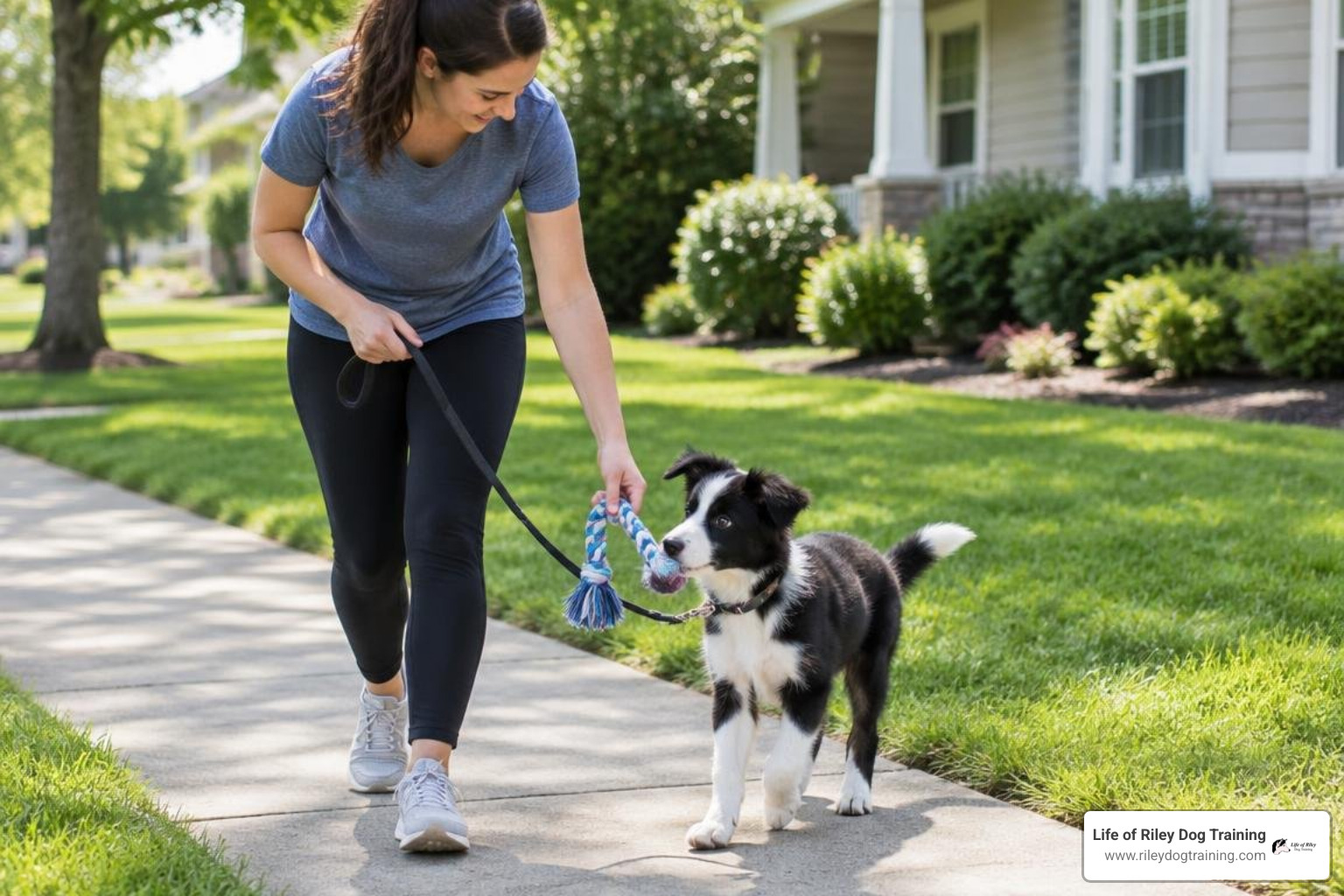
- Redirect with an appropriate toy: Once your puppy backs away or sits, present a long fleece tug toy or soft ball that you carry on walks. Wiggle the toy along the ground to offer a legal target for their chase drive.
- Build lure-and-reward walking: Hold a small treat pouch at your hip. Take two slow, deliberate steps. If your puppy walks beside you without biting, immediately mark with "yes" and deliver a treat at your knee level.
- Gradually increase duration: Over several days, progress from two steps to five steps, then ten steps before delivering the reward. If your puppy relapses and grabs your heel, calmly freeze again and repeat the sequence.
Teaching Alternative Behaviors and the Off-Switch
Border Collies excel when they have a concrete job to perform instead of guessing what you want. Teaching an incompatible behavior gives their brilliant brain a constructive task while you navigate the house.
One of the most effective skills is a hand target, often called the "touch" cue. Teach your puppy to boop their nose against your open palm for a reward. When you walk from the living room to the kitchen, hold your hand down at your side and ask for repeated nose touches. A puppy cannot bite your ankles if their nose is glued upward against your palm.
Equally important is teaching your puppy how to relax. Many high-drive puppies lack a natural off-switch and must be systematically taught how to settle. Introduce a dedicated training mat and reward your puppy for lying down quietly with their head resting on their paws. By practicing impulse control games like "wait" at open doorways and practicing a solid "leave it" cue with moving toys, your puppy learns that resisting motion brings far greater rewards than chasing it.
Meeting Physical and Mental Needs to Prevent Mouthy Behavior
A bored Border Collie is an inventive Border Collie, and their inventions rarely align with human household rules. As the most intelligent dog breed in the world, these dogs require a thoughtful balance of physical movement and mental problem-solving to stay emotionally level.
Age-Appropriate Physical Exercise
It is easy to assume that a mouthy, energetic puppy just needs endless running to tire out. However, excessive high-impact exercise can damage developing joints and create an over-conditioned canine athlete who requires ever-increasing amounts of exercise to feel satisfied.
A standard guideline for growing dogs is approximately five minutes of structured exercise per month of age, up to twice daily. For example, a four-month-old puppy needs around 20 minutes of structured walking per session. Keep these key considerations in mind:
- Protect growth plates: Avoid repetitive, high-impact activities like catching frisbees mid-air, jumping off high furniture, or forced running on hard pavement until growth plates close between 12 and 18 months of age.
- Incorporate sniff walks: Instead of marching briskly around the block, allow your puppy to wander on a loose leash and sniff grass, trees, and fence lines. Scent exploration activates the parasympathetic nervous system, lowering heart rates and encouraging relaxation.
- Limit endless games of fetch: Repetitive ball throwing can elevate adrenaline and worsen obsessive chasing habits. Replace continuous fetch with short, controlled training games.
Mental Enrichment and Channelling the Herding Drive
Border Collies need cognitive work as much as physical activity. Mental exertion tires out a working puppy safely and satisfies their innate desire to solve problems.
You can also channel their natural driving instincts into structured dog sports like Treibball, where dogs learn to push large exercise balls toward a goal following their handler's directional cues. A flirt pole (a fleece lure attached to a flexible pole) provides another fantastic outlet, provided you use it to practice impulse control by asking for a "sit" and "wait" before releasing the puppy to chase the lure.
Management Strategies: Tethers, Crates, and Boundary Setting
While training teaches your puppy long-term self-control, management prevents them from practicing and reinforcing unwanted habits in the meantime. High-intelligence breeds learn behavioral patterns quickly, reinforcing both positive habits and unwanted behaviors equally fast if unmanaged.
| Tool | Primary Safety Utility | Nipping Prevention Score | Best Household Application |
|---|---|---|---|
| Puppy Playpen | Creates a secure, enclosed zone free from household hazards. | High: Completely blocks access to moving feet. | Perfect for when you are cooking, cleaning, or supervising busy children. |
| Baby Gates | Restricts puppy to puppy-proofed rooms with non-slip flooring. | High: Allows easy step-over separation when puppy becomes overstimulated. | Ideal for managing hallway traffic and high-speed motion zones. |
| Indoor Drag Leash | Provides an easy way to redirect the puppy without grabbing collars. | Moderate: Allows quick, gentle redirection away from clothing. | Use during supervised free time in living areas to interrupt ankle grabs. |
| Stationary Tether | Keeps puppy anchored near their bed while family moves about. | Moderate to High: Limits chasing range during household chores. | Use only with a back-clip harness during quiet, supervised chew sessions. |
| Crate | Safe sanctuary for deep, restorative sleep and quiet rest. | High: Prevents overtired evening biting tantrums. | Essential for scheduled naps and overnight sleeping routines. |
A 12-week-old Border Collie puppy can focus on training for only about 5 to 10 minutes at a time. The rest of their day should consist of structured play, safe chewing, and plenty of restorative sleep. If your household is dealing with chaotic daily routines, our structured dog training programs can help you establish clear boundaries and calm home routines.
Frequently Asked Questions About Border Collie Puppy Nipping
Why is my border collie puppy nipping ankles when I move quickly?
Fast movement triggers the predatory motor pattern hardwired into herding breeds. When you run, rush to answer the door, or when children play tag, your acceleration activates your puppy's instinctual drive to chase, head off, and control moving objects. To your puppy, sudden speed looks like a stray sheep breaking away from the flock. Managing speed around young puppies and teaching a reliable "sit-stay" helps prevent this arousal spike.
How long does it take to train a herding puppy to stop biting feet?
With strict household consistency, most owners see a major reduction in ankle chasing within 2 to 4 weeks. However, complete impulse control is a developmental process. Basic obedience for a Border Collie usually takes 4 to 8 weeks of daily practice, while reliable impulse control and bulletproof recall often take 6 to 18 months to fully mature. Consistency across all family members is the single most important factor in how quickly the behavior fades.
When should I consult a professional dog trainer?
You should reach out for personalized, professional guidance if your puppy's nipping breaks skin repeatedly, if the puppy shows signs of guarding toys or food, or if the behavior is accompanied by stiff body posture, growling, or intense fear. Early intervention ensures that typical herding behaviors do not develop into secondary reactivity or persistent compulsive habits as your dog reaches adolescence.
Guiding Your Herding Puppy Toward Calm Companionship
Raising a Border Collie puppy is one of the most rewarding journeys a dog owner can experience, but it certainly tests your patience during the early months. Those sharp puppy teeth and persistent heel-chasing habits are not signs of a "bad" dog. They are simply the unpolished instincts of a brilliant working breed trying to make sense of a human environment.
By remaining calm, freezing motion when teeth make contact, providing age-appropriate mental jobs, and ensuring your puppy gets adequate sleep, you can transform that intense herding focus into polite manners. Celebrate the small victories, keep your training sessions short and playful, and remember that consistent guidance today builds an attentive, gentle companion for life.
For families seeking hands-on support, Life of Riley Dog Training provides personalized in-home training across Northwest Indiana and Southwest Michigan, helping you raise a well-mannered companion with confidence.