
The Best Way to Teach a Puppy Not to Bite Your Hands and Feet
Why Puppies Bite: Exploration, Teething, and Play
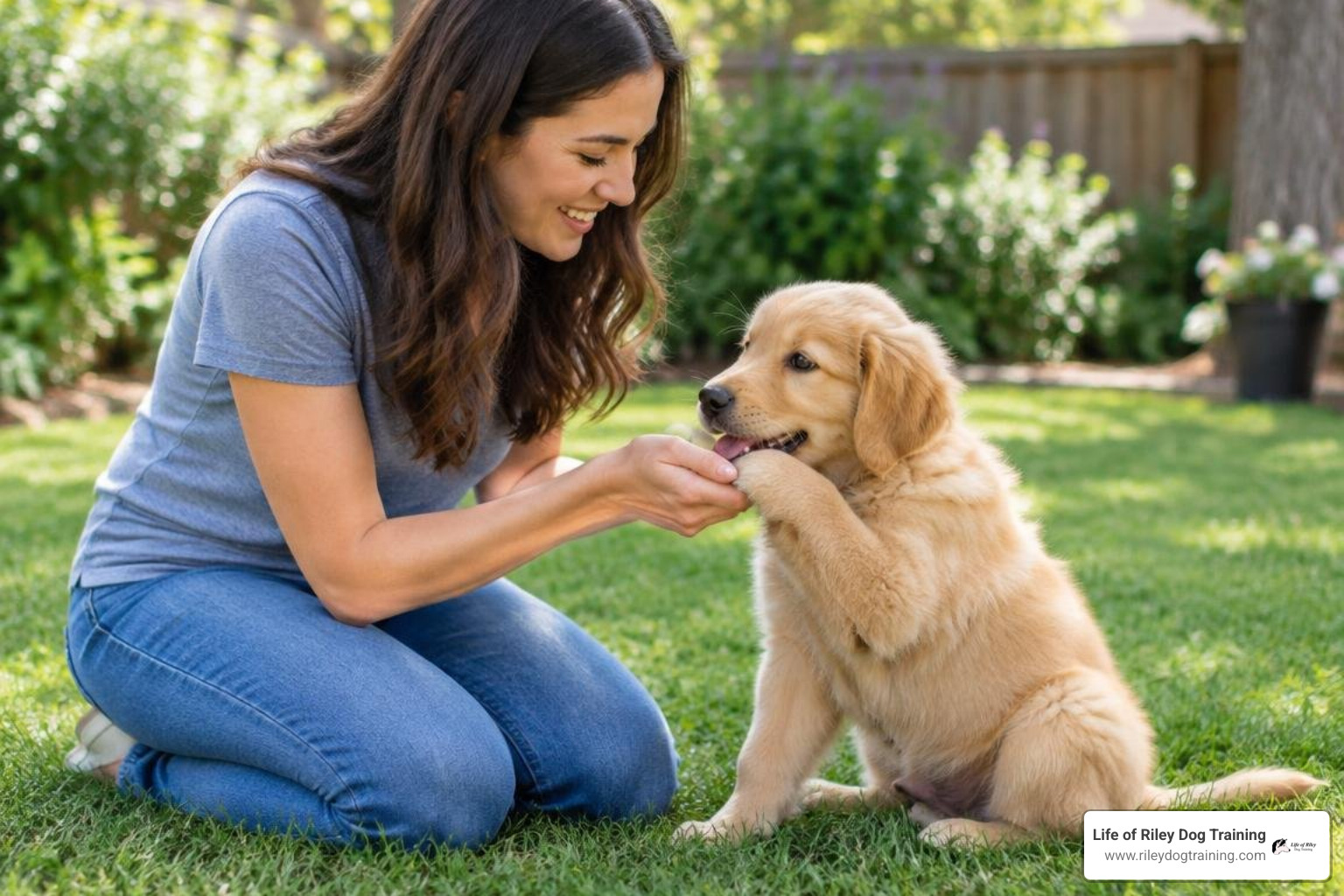
The best way to teach a puppy not to bite is to freeze movement when teeth touch skin, immediately redirect to an approved chew toy, use brief calm time-outs for hard bites, and enthusiastically reward gentle mouth contact. This approach teaches bite inhibition before eliminating mouthing entirely, helping your puppy learn that human skin is fragile while still satisfying their natural need to chew.
Puppies explore the world through their mouths, armed with roughly 28 razor-sharp puppy teeth. Understanding why your puppy bites can help you teach gentler play and guide their chewing toward toys. Preventing bites also helps protect your family from infection. One study found Pasteurella, a type of bacteria, in 50 percent of the infected dog bite wounds it examined (Talan et al., 1999). Establishing gentle mouth habits early helps protect both family members and growing dogs.
Puppies use their mouths to explore their surroundings, toys, and people. When your puppy chases pants cuffs, mouths fingers, or grabs shoes, they are showing normal, instinctive behaviors.
In a litter, puppies engage in social play consisting of wrestling, chasing, and mock fighting. When one puppy clamps down too hard, the playmate lets out a sharp yelp and pauses play. This simple social feedback teaches young dogs how their jaw strength affects others. In a human home, young puppies frequently become overstimulated, confusing hands and moving feet with littermates or prey.
Understanding Teething Pain and Age Milestones
Teething plays a big part in mouthing behavior. Around 12 to 13 weeks of age, puppy biting often reaches its peak as baby teeth loosen and adult teeth begin coming through. Sore gums can make your puppy want to chew on firm surfaces for relief.
By 7 months of age, all 42 adult teeth have typically grown in, so teething pain is usually no longer a main reason for biting. For a detailed breakdown of developmental timelines, see the PetMD guide on puppy nipping causes.
What Is Bite Inhibition and Why Teaching It Early Helps
Bite inhibition means controlling how hard a dog bites. Rather than stopping all mouth contact at once, you first help your puppy learn a "soft mouth," or gentle pressure.
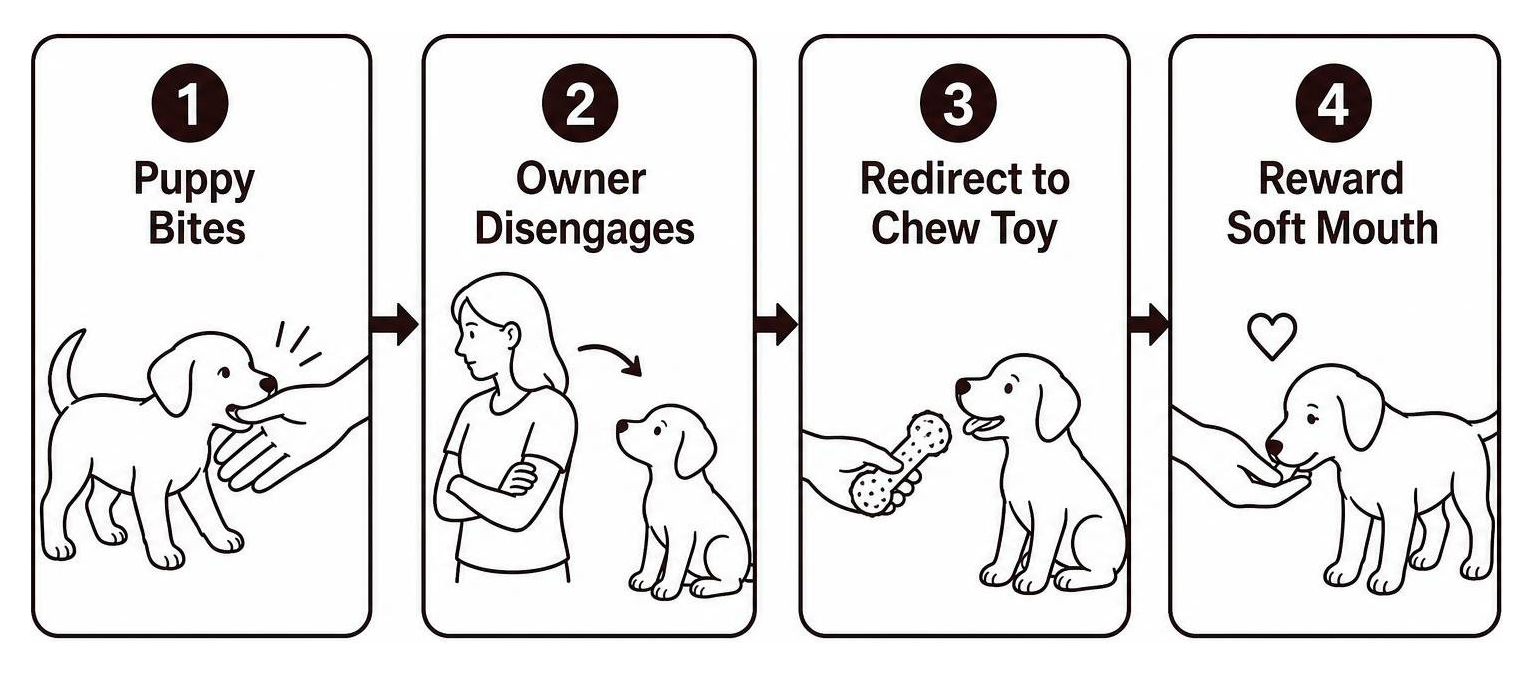
A dog that learns bite inhibition as a puppy can carry that control over bite pressure into adulthood. If an adult dog is ever startled or injured, that control can help limit how much harm a bite causes. Guidance from the AKC advice on puppy bite inhibition emphasizes teaching puppies that human skin is fragile before teaching them to stop mouthing people altogether.
The Step-by-Step Method: The Best Way to Teach a Puppy Not to Bite
Teaching your puppy not to bite works best with clear, reward-based communication rather than physical corrections. At Life of Riley Dog Training, our philosophy for dog training centers on positive reinforcement, setting clear boundaries, and helping dogs learn to control their reactions. The following four steps work together to help your puppy understand that human skin is delicate and that chew toys offer a safe way to satisfy their need to chew.
Step 1: Disengage and Freeze Instantly
When puppy teeth touch your skin or clothing, pause and hold still. Jerking your hands away or running can bring out your puppy's instinct to chase and encourage harder biting.
- Go limp and still.
- Avoid making loud, dramatic noises if high-pitched sounds excite your puppy further.
- Remove all eye contact and attention for 10 to 15 seconds.
This brief pause communicates that biting ends all fun and interaction. The moment your puppy releases pressure, you can move to the next step.
Step 2: Redirect Immediately to Approved Chew Items
Once the puppy lets go of skin or clothes, offer an appropriate chew toy. Keep durable items, such as rubber toys, textured nylon bones, or cold teething rings, readily available across different rooms.
- Place the toy directly in front of the puppy's mouth.
- Gently wiggle the toy along the floor to engage interest.
- Rotate available toys every 2 to 3 days to maintain novelty.
Consistent redirection teaches your puppy that chewing is acceptable when directed toward toys, not hands or clothing.
Step 3: Use Brief, Consistent Time-Outs for Hard Bites
If a puppy continues biting despite redirection, use a brief, calm time-out. This is an emotional reset rather than a punishment.
- Step behind an exercise pen, baby gate, or door for 30 to 60 seconds.
- Return calmly once your puppy settles.
- Keep your puppy's sleeping crate a comfortable place to rest, rather than using it for punishment.
Time-outs help overstimulated puppies regain composure and learn that hard biting consistently removes access to their favorite person.
Step 4: Enthusiastically Reward Gentle Play and Licking
Reward calm behavior and soft-mouth interactions with verbal praise and small treats.
- When your puppy sniffs or licks hands without using teeth, praise them in that moment.
- Offer a treat to reward calm physical contact.
- Rewarding gentle contact helps your puppy learn how to play safely with your family.
Over time, your puppy will choose licking and soft mouthing over hard bites because gentle behavior earns attention and rewards.
Targeted Solutions for Common Biting Triggers
Certain movements and daily routines can prompt more mouthing. You can help by adjusting your puppy's surroundings and routine, while noticing what encourages biting in each situation.
Best Way to Teach a Puppy Not to Bite Ankles and Feet
Moving feet and swinging pant legs mimic small animals, triggering herding and chasing instincts. The ASPCA guidelines on puppy mouthing highlight several effective management strategies:
- Freeze in Place: Stop walking when teeth touch shoes or socks. Continued movement can encourage the chase.
- Treat Scattering: Toss a handful of treats ahead on the floor before walking through places where your puppy tends to get excited, helping them focus on the floor instead of your feet.
- Carry a Tug Toy: Keep a soft fleece tug toy in hand to give your puppy something appropriate to bite while moving between rooms.
Practice these strategies during calm moments first, then gradually introduce them during higher-energy transitions such as moving from the living room to the kitchen.
Best Way to Teach a Puppy Not to Bite During Teething and Overtiredness
Young puppies require 16 to 18 hours of sleep per day. When puppies become overtired, they lose impulse control and frequently enter an evening "witching hour" marked by frantic biting.
- Enforced Naps: Help your puppy settle in a quiet, darkened resting area every 1 to 2 hours of awake time.
- Frozen Soothing Chews: Offer frozen, stuffed rubber toys or damp, chilled washcloths to soothe sore gums during teething peaks.
- Mental Enrichment: Provide snuffle mats, which hide food among fabric strips for your puppy to sniff out, and food puzzles to use up some energy without getting your puppy more excited.
Recognizing the difference between teething discomfort and overtiredness helps you choose the right intervention. A puppy that has been awake for several hours likely needs rest, while a well-rested puppy chewing persistently on household items may need a frozen teething aid.
Puppy Biting Timeline, Progress Tracking, and Mistakes to Avoid
Teaching gentle mouth habits is a developmental process that requires patience and steady consistency across all family members. Tracking your puppy's progress against typical milestones helps you recognize improvement and adjust your approach when needed.
| Age Stage | Developmental Focus | Training Strategy | Expected Behavior |
|---|---|---|---|
| 8–12 Weeks | Exploration & early social cues | Teach bite inhibition; freeze and redirect to toys | Frequent mouth contact; sharp baby teeth |
| 12–16 Weeks | Teething peak; adult teeth emerging | Provide frozen chews; help your puppy settle; enforce naps | Intense urge to chew; increased biting frequency |
| 4–5 Months | Impulse control development | Consistent brief time-outs; reward soft mouth | Noticeable reduction in biting frequency and force |
| 6–7 Months | Adult teeth fully grown in | Maintain boundaries; refine verbal cues | Biting mostly resolved; consistent control over bite pressure |
For owners seeking structured guidance through developmental stages, our in home day training lessons provide personalized support within your daily environment.
Common Training Pitfalls That Worsen Biting
- Physical Punishment: Tapping noses, holding muzzles shut, or rolling puppies onto their backs can create fear and turn play biting into biting to defend themselves.
- Rough Hand Wrestling: Rough games with bare hands encourage puppies to treat human skin as a toy.
- Inconsistent Responses: Allowing mouthing during relaxed moments but discouraging it during energetic play can make it harder for your puppy to understand what you want.
- High-Pitched Shrieking: Excessive yelling often makes puppies more excited and can turn your reaction into part of the game.
Avoiding these common mistakes keeps training sessions positive and prevents accidental reinforcement of the very behavior you are trying to reduce.
Frequently Asked Questions About Puppy Biting
What are the warning signs that puppy biting is actual aggression?
True aggression in young puppies is uncommon. Warning signs include a stiff, frozen body, a fixed hard stare, lip curling, deep low growling, and biting to keep people or other animals away from food or toys, a behavior called resource guarding. If you notice these behaviors, seek professional behavioral guidance so you and your puppy can get support.
Why does my puppy bite harder when I say no or push them away?
Your puppy may interpret being pushed away as play or wrestling. Pushing or saying "no" can make your puppy more excited or frustrated, which may lead to harder bites.
At what age will my puppy completely stop biting?
Most puppies show substantial improvement by 4 to 5 months of age, with biting often easing considerably between 6 and 7 months as their adult teeth grow in and they become better at controlling their reactions. This is a guide rather than a deadline, so keep supporting your puppy with consistent, gentle training.
Helping Your Puppy Build Gentle Mouth Habits
Teaching a puppy not to bite takes patience as your puppy grows, consistent household boundaries, and rewards for the behaviors you want to encourage. With help for sore gums, enough rest, and safe toys to chew, your puppy can learn gentler mouth manners. The best way to teach a puppy not to bite combines freezing movement, immediate redirection to chew toys, calm time-outs for hard bites, and enthusiastic rewards for soft mouth contact. For hands-on assistance across northwest Indiana, explore Life of Riley Dog Training for support in building lasting, force-free habits in your home.
References
Talan DA, Citron DM, Abrahamian FM, Moran GJ, Goldstein EJ. "Bacteriologic analysis of infected dog and cat bites. Emergency Medicine Animal Bite Infection Study Group.." The New England journal of medicine, 1999. PMID 9887159.