
How to Stop Border Collie Puppy Nipping
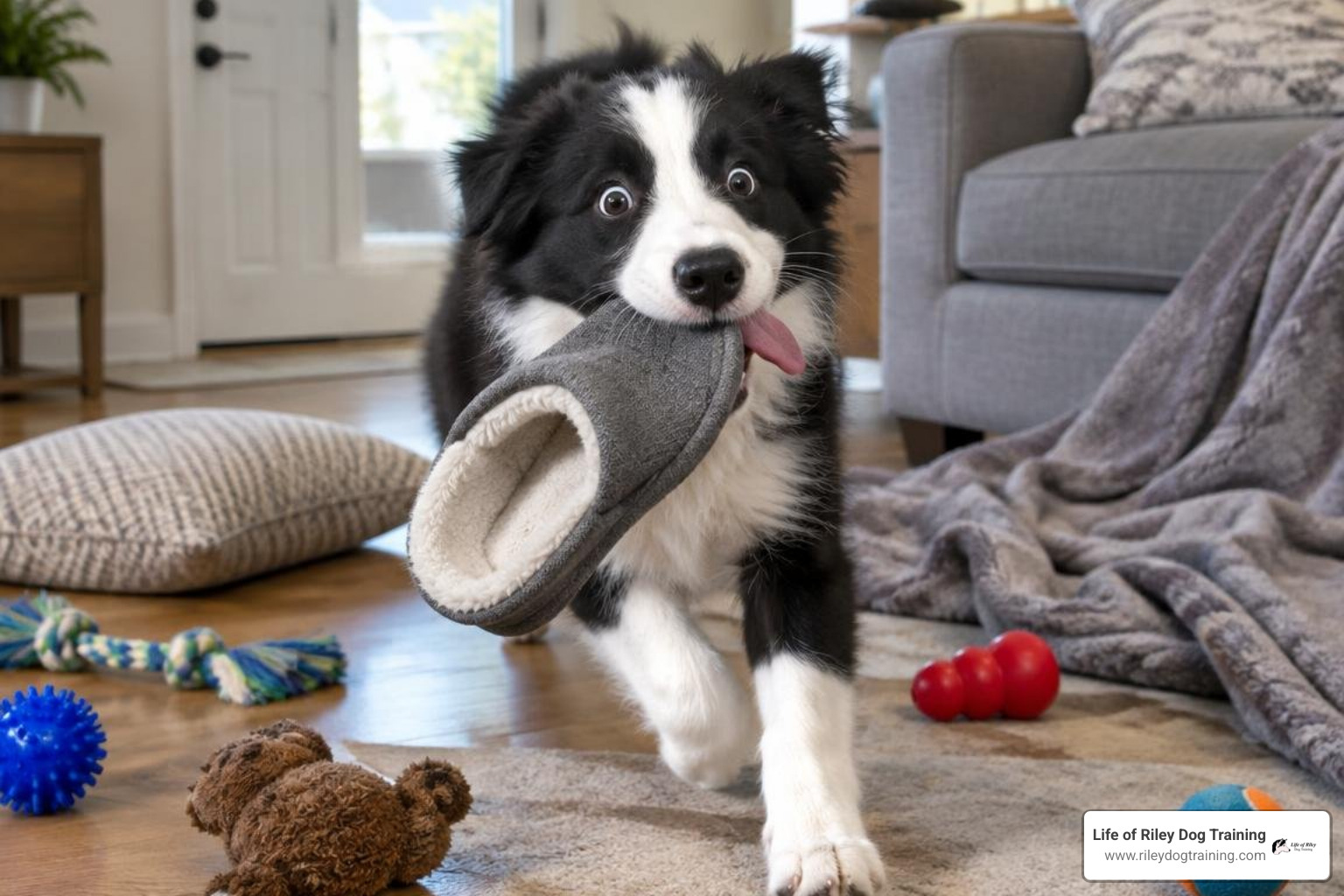
When your puppy nips, stop moving, calmly offer a long toy, and praise them for biting the toy instead. If they keep going, step behind a baby gate for a brief pause. Keep toys close to where nipping happens, and give your puppy regular chances to rest. Fast-moving hands or feet and long play sessions can make biting harder to stop.
Border Collie puppies are quick to notice movement, which can make ankles especially tempting targets. They also explore with their mouths and may chew more while teething. Nipping is common in young puppies, but you can start teaching gentler habits now with short, consistent practice.

Understanding Border Collie Puppy Nipping: Instinct vs. Teething
Living with a young Border Collie often feels like sharing your living room with a lightning-fast genius who also happens to possess needle-sharp teeth. When these pups grab pant legs or pinch skin, it helps to understand what is driving that behavior.
As recognized by the American Kennel Club, Border Collies are working dogs bred over generations to control the movement of livestock across vast fields. They use intense focus, known as "the eye," along with stalking, chasing, and a quick grip at the heels of stubborn sheep. When you bring that working heritage into your home, your puppy naturally applies those hardwired motor patterns to the most active things in the environment: your feet, hands, children, and flowing clothing.
At the same time, young puppies go through rapid physical development. Teething causes genuine gum tenderness, prompting them to chew on anything within reach for soothing relief. By separating natural working drive from teething discomfort or social overexcitement, we can choose the most effective, gentle solution for each moment.
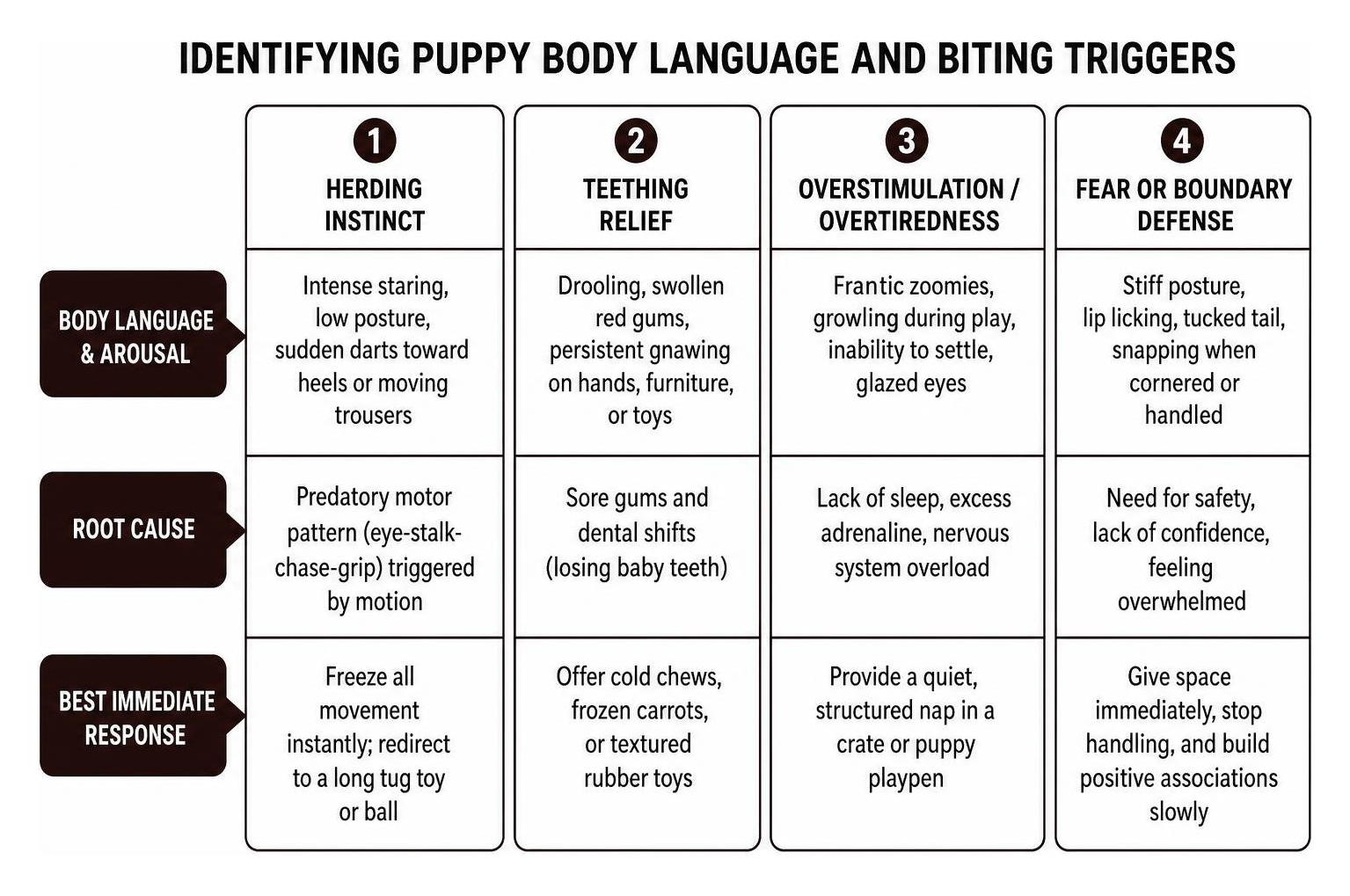
| Biting Trigger | Body Language & Arousal | Root Cause | Best Immediate Response |
|---|---|---|---|
| Herding Instinct | Intense staring, low posture, sudden darts toward heels or moving trousers | Predatory motor pattern (eye-stalk-chase-grip) triggered by motion | Freeze all movement instantly; redirect to a long tug toy or ball |
| Teething Relief | Drooling, swollen red gums, persistent gnawing on hands, furniture, or toys | Sore gums and dental shifts (losing baby teeth) | Offer cold chews, frozen carrots, or textured rubber toys |
| Overstimulation / Overtiredness | Frantic zoomies, growling during play, inability to settle, glazed eyes | Lack of sleep, excess adrenaline, nervous system overload | Provide a quiet, structured nap in a crate or puppy playpen |
| Fear or Boundary Defense | Stiff posture, lip licking, tucked tail, snapping when cornered or handled | Need for safety, lack of confidence, feeling overwhelmed | Give space immediately, stop handling, and build positive associations slowly |
The Primary Triggers of Border Collie Puppy Nipping
The primary engine behind Border Collie puppy biting is motion sensitivity. While a Golden Retriever might mouth your hand simply to say hello, a Border Collie puppy is often reacting to a predatory motor sequence triggered by fast steps across the kitchen floor.
When you rush past your puppy to answer the door, their instinct screams that stock is getting away. To an energetic pup, an escaping heel is an invitation to work. Without clear guidance, they practice this livestock-controlling behavior on family members every day.
Learning the best way to teach a puppy not to bite starts with teaching impulse control and replacing mouthy instincts with calm behaviors. For instance, teaching a simple hand target (touching their nose to your open palm for a reward) gives your puppy an alternate, polite way to interact with human hands without using their teeth.
How to Differentiate Play, Teething, Fear, and Herding Drives
Recognizing your puppy's emotional state helps you respond with patience and accuracy:
- Playful Mouthing: The body is loose and wiggly. The puppy bounces in and out, takes turns, and readily engages with toys. The mouth is open and soft, even if they occasionally misjudge their bite pressure.
- Teething Discomfort: Teething begins around 3 to 4 weeks of age, but the most intense biting window occurs between 8 and 16 weeks. Puppies during this phase will seek out firm surfaces to press their gums against. By around six months, most puppies have their adult teeth, and the worst teething-related biting naturally subsides.
- Herding Drives: The pup's body lowers slightly into a crouch. You will see an unwavering, locked gaze at your feet or legs just before a targeted dash and nip.
- Fear Snapping: The puppy freezes, leans away, shows the whites of their eyes (whale eye), or pulls their lips back. This is not playful or herding behavior; it is a clear plea for distance. Never punish a fearful puppy, as corrections will only increase their worry.
Proven Techniques to Stop Nipping at Hands, Feet, and Clothing
Teaching bite inhibition means helping your puppy learn to control the strength of their jaws first, followed by reducing how often they put their teeth on people. In the litter, puppies learn these lessons from their mother and littermates. When one puppy bites too hard, the playmate squeals and leaves, teaching the biter that painful bites end the fun. In our homes, we can teach the exact same lesson using calm, clear boundaries.
The Freeze-Pause-Redirect Framework
When your puppy makes contact with your skin or clothing, avoid jerking away or running, because sudden movement fuels the chase. Instead, follow this systematic framework:
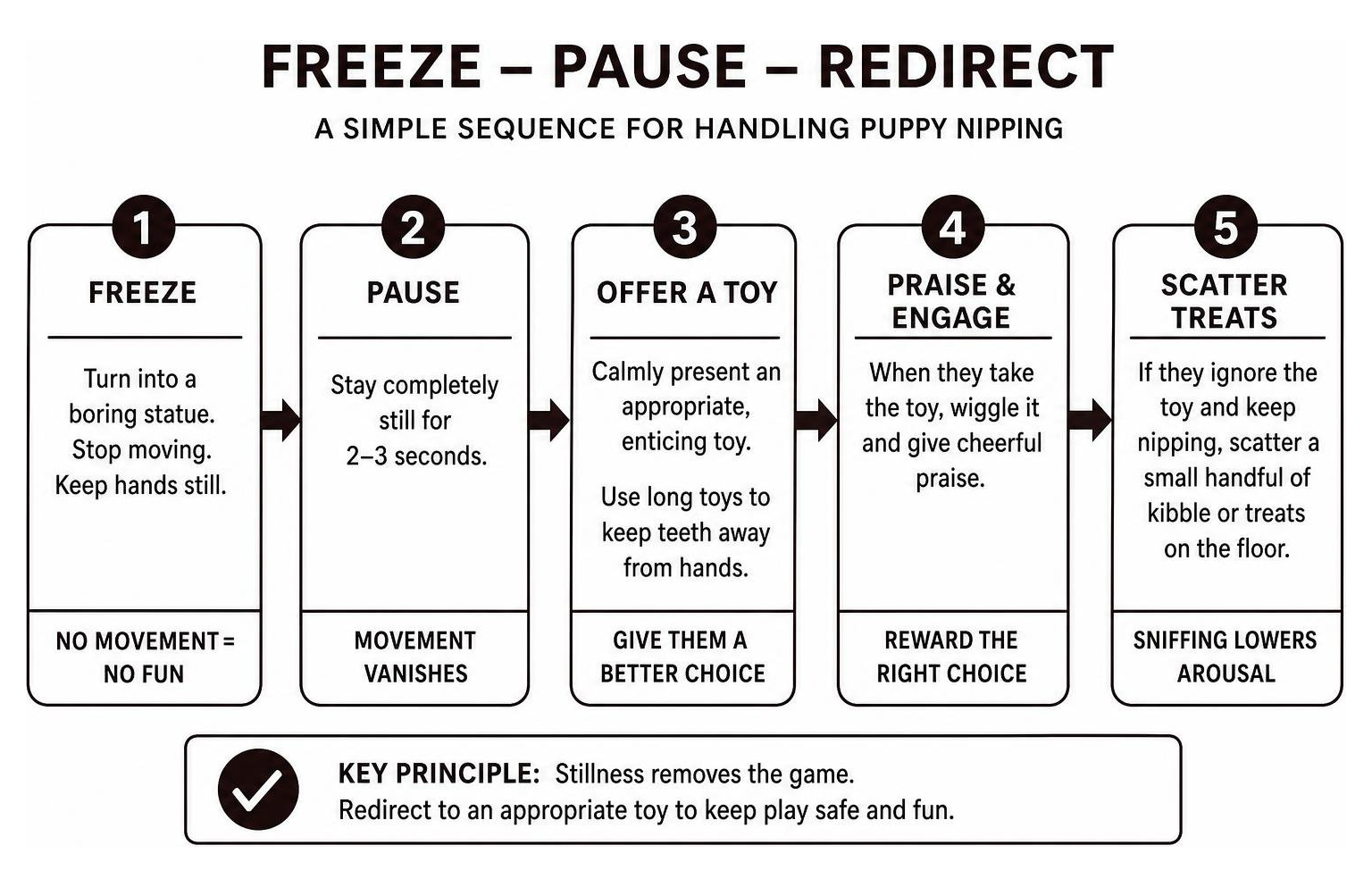
- Freeze: The split second teeth touch your skin or clothes, turn into a boring statue. Drop your hands against your chest or let them go completely still. Stop walking.
- Pause: Give your puppy two to three seconds of complete stillness. Movement has vanished, and so has the fun.
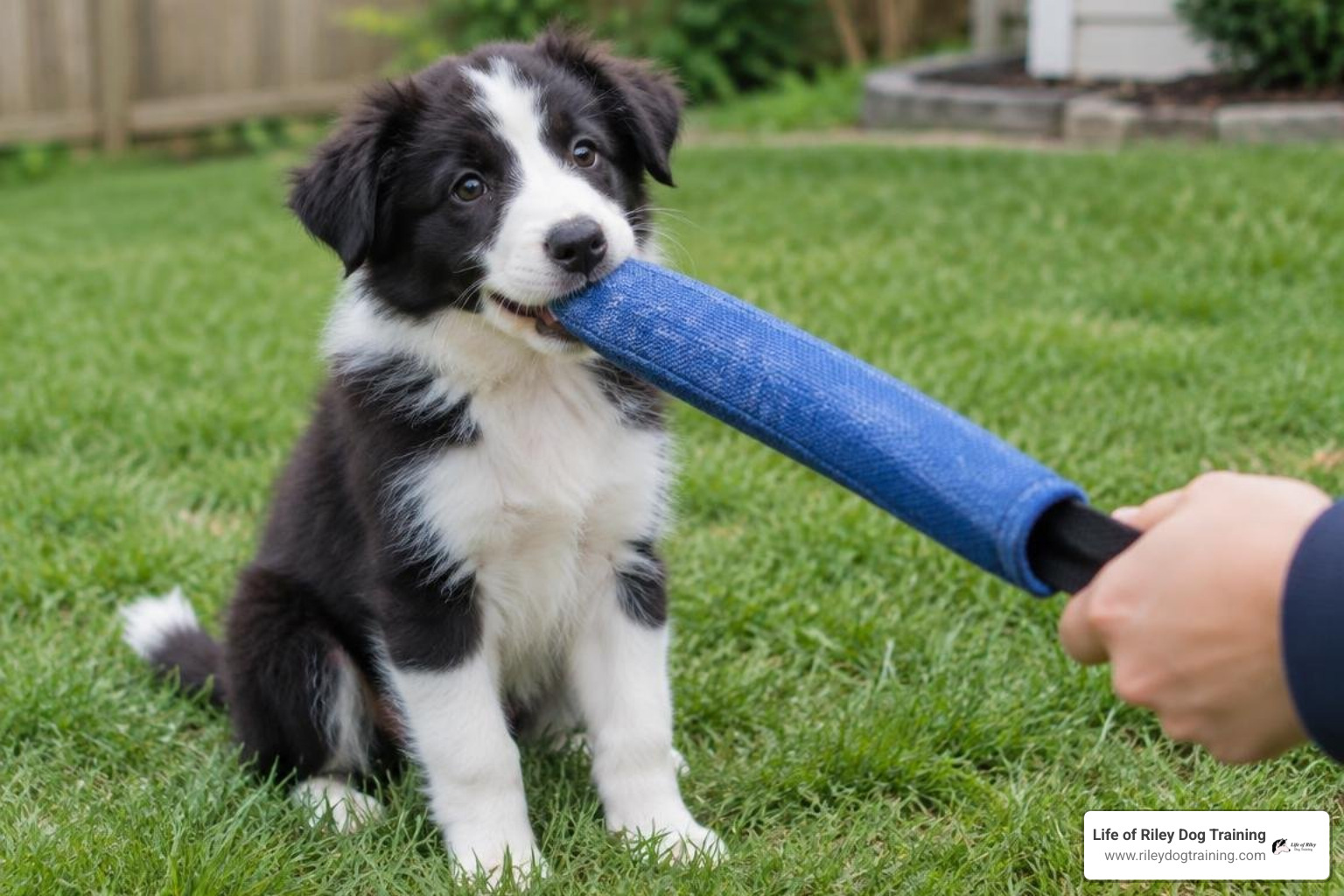
- Offer a Toy: Calmly present an appropriate, enticing object. Long toys like fleece braids, plush ropes, and soft tugs keep little teeth safely away from your fingers.
- Praise and Engage: As soon as your puppy's jaws close on the toy instead of you, bring the toy to life with gentle wiggles and cheerful praise.
- Scatter Treats for Tenacious Biters: If your puppy ignores the toy and continues tugging at your jeans, quietly scatter a small handful of kibble or treats across the floor. Sniffing activates the seeking system in their brain, lowering arousal and redirecting their nose to the ground.
Keep high-value chews readily accessible throughout your home, including:
- Frozen rubber toys filled with soaked kibble or unsweetened pumpkin
- Whole frozen carrots, which naturally soothe inflamed gums
- Braided fleece tug toys that allow you to play at a safe distance
- Textured dental chew bones designed specifically for puppy teeth
Why Yelping and High-Pitched Reactions Fail
Many puppy owners are told to let out a loud, high-pitched "Yelp!" or "Ouch!" whenever their puppy bites. While this method can work for softer, more sensitive breeds, it frequently backfires with herding puppies.
To a high-drive Border Collie, a high-pitched squeal sounds remarkably like an injured prey animal or an excited littermate. Rather than calming them down, the noise spikes their arousal and kicks their predatory drive into overdrive, leading to harder bites, jumping, and frantic barking.
If vocal corrections excite your puppy, switch to a silent "reverse time-out." When teeth touch your skin:
- Stand up calmly without speaking or making eye contact.
- Cross your arms and step over a baby gate or step into another room, closing the door behind you.
- Wait 10 to 20 seconds until the puppy is quiet and all four paws are on the floor.
- Return calmly and resume interaction.
This teaches your clever puppy an undeniable cause-and-effect rule: teeth on humans make the fun human disappear instantly.
Managing Overstimulation with Daily Routines and Management Tools
A common reason a Border Collie puppy turns into a tiny biting monster is sheer exhaustion. Young puppies need between 18 and 20 hours of quality sleep every single day. Because Border Collies are bred to stay alert and scan for movement, they rarely put themselves to bed when tired.
Instead, an overtired puppy throws the canine equivalent of a toddler tantrum: racing around the room, zooming over furniture, and biting relentlessly at hands and clothing.
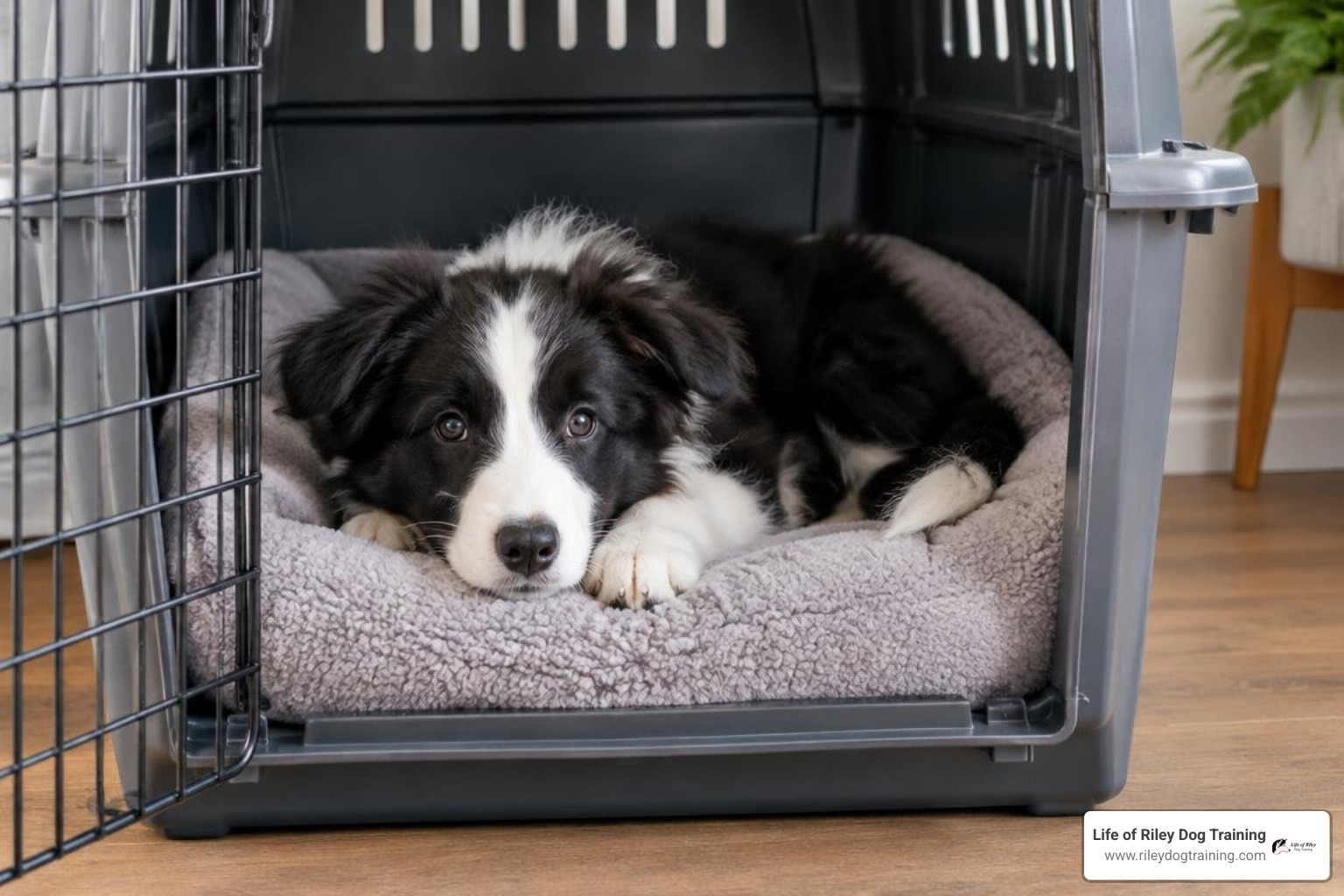
Safe Crate and Tether Training for Calm Boundaries
Setting up safe, comfortable boundaries gives your puppy a designated space to decompress while keeping your ankles safe.
- The Puppy Playpen / Crate: A well-ventilated crate or an exercise pen placed in a low-traffic area gives your puppy a secure resting zone. If your puppy becomes overstimulated and cannot stop biting despite redirection, calmly place them in their pen with a stuffed chew toy. This is not a punishment; it is a neutral rest break designed to help an overtired nervous system reset.
- Tether Training: Tether training involves using a lightweight leash attached to your waist or a sturdy piece of furniture while you work or relax nearby. This management tool keeps the puppy close for supervision while preventing them from charging across the room to nip ankles. If your puppy gets frustrated on a tether, transition them back to a cozy pen where they can relax freely.
Establishing Predictable Sleep and Play Routines
Predictable daily schedules reduce anxiety and emotional volatility in working breeds. Structure your puppy's day around short, engaging activity windows followed by long, restorative naps:
- Wake Up & Potty Break: Immediate trip outside, followed by gentle praise for going.
- Short Training Burst (3 to 5 Minutes): Practice basic skills like eye contact, name recognition, and hand targeting. Keep training sessions brief and always end on a successful, happy note.
- Interactive Breakfast: Feed meals via puzzle feeders, snuffle mats, or training games rather than a plain bowl.
- Enforced Nap (1.5 to 2 Hours): Settle your puppy in their quiet crate or pen with a safe chew item.
- Play & Mental Exercise: Gentle tug games, exploration in the yard, and positive exposure to new sights and sounds.
- Rest & Repeat: Maintain this balanced rhythm throughout the day.
This steady cadence supports our core positive reinforcement training philosophy, ensuring that puppies feel secure, understood, and emotionally balanced.
Channeling Working Drive with Mental and Physical Outlets
A tired Border Collie is a well-behaved Border Collie, but physical exercise alone is rarely the complete answer. If you try to exhaust a herding puppy with endless running, you will simply build an ultra-athletic, overstimulated puppy with even less impulse control. True satisfaction for this breed comes from engaging their brilliant minds.
Mental Stimulation Brain Games for High-Drive Pups
Mental workouts burn excess energy quickly, leaving your puppy relaxed and peaceful:
- Nose Work and Scent Games: Scatter your puppy's meal in tall grass or hide small piles of kibble under cardboard boxes around the room. Sniffing lowers heart rates and naturally calms the nervous system.
- The Collar Grab Game: Gently touch your puppy's collar, feed a high-value treat, and release. Repeat this daily so your pup learns that hands reaching for their neck predict tasty rewards, preventing defensive mouthiness when handled.
- Intentional Tug: Play tug with a long toy using clear rules. Ask for a "Sit" before starting, play enthusiastically for 15 seconds, freeze the toy against your leg, cue a "Drop," and reward their release with another round of tug. This builds incredible impulse control in the middle of high arousal.
For more structured ideas, explore our full collection of puppy training guides and tips.
Physical Outlets That Prevent Ankle Chasing
You can satisfy your puppy's natural desire to chase without letting them herd your feet:
- The Flirt Pole: A flirt pole is essentially a long wand with a soft fleece lure attached to a cord. It allows your puppy to stalk, chase, and grip a moving target at a safe distance while you practice "Wait" and "Leave it" cues. Keep jumps low to protect growing puppy joints.
- Carrying Toys on Walks: If your puppy grabs your leash or pants legs during walks, hand them a favorite ball or soft toy to carry in their mouth. Having a "job" gives their mouth a purpose and prevents grazing on your legs.
Frequently Asked Questions About Border Collie Biting
When Border Collie Puppy Nipping Requires Professional Intervention
While mouthing is standard puppy behavior, it is vital to know when nipping crosses the line into something that needs skilled assistance. According to veterinary behavioral studies, 87% of aggressive behavior cases reported by UK vets involve dogs under 3 years of age, and half of surveyed clinics report a steady rise in canine behavioral concerns. Border Collies, due to their intense sensitivity and herding instincts, are also frequently cited in nipping incidents involving fast-moving children.
You should seek professional support if you observe:
- Biting accompanied by a stiff, frozen body, growling, or snarling over food, toys, or resting spots (resource guarding)
- Bite intensity that consistently breaks human skin after 16 weeks of age
- Nipping driven by genuine fear, avoidance, or environmental sound sensitivity
- An inability for the puppy to settle down even after basic exercise and nap needs are met
Our team provides comprehensive in-home dog training programs tailored to your home environment, addressing underlying emotional needs before nuisance biting turns into an adolescent challenge.
Why does my Border Collie puppy constantly target my ankles when I walk?
Your ankles move quickly and stay close to the ground, mimicking the motion of livestock. To stop this:
- Freeze the moment teeth touch shoes or socks.
- Hold a high-value treat or toy right at your hip level before you take a step, keeping their focus upward toward your hands rather than down at your feet.
- Reward them for walking quietly beside you without lunging at your shoes.
How do I stop my puppy from nipping during leash training?
Leash nipping usually stems from overexcitement or frustration with movement restriction. Start leash practice indoors in very short, 2-minute sessions. Let the puppy drag a lightweight leash around the room while you reward calm focus. When holding the leash, offer your puppy a toy to hold in their mouth, and reward slack in the line with praise and small treats.
Partnering with Your Puppy for Lifelong Calm
Raising a Border Collie puppy is an extraordinary adventure. Their boundless curiosity, swift intelligence, and eager energy make them one of the most rewarding companions in the world, even when their sharp little teeth test your patience. Nipping is not a sign of malice or poor character; it is simply an untrained herding drive and normal puppy development meeting the human world.
With consistent routines, positive redirection, adequate rest, and plenty of mental enrichment, that intense nipping phase will quickly give way to focus, gentle companionship, and joyful teamwork.
If you ever feel overwhelmed or need an experienced partner to guide your training journey, we are here for you. We provide personalized in-home puppy training support across Northwest Indiana and Southwest Michigan, helping families in Chesterton, Valparaiso, Michigan City, La Porte, Niles, and surrounding communities raise calm, confident, and well-mannered dogs with lifelong support.