
How to Help a Dog Who Pees During Greetings
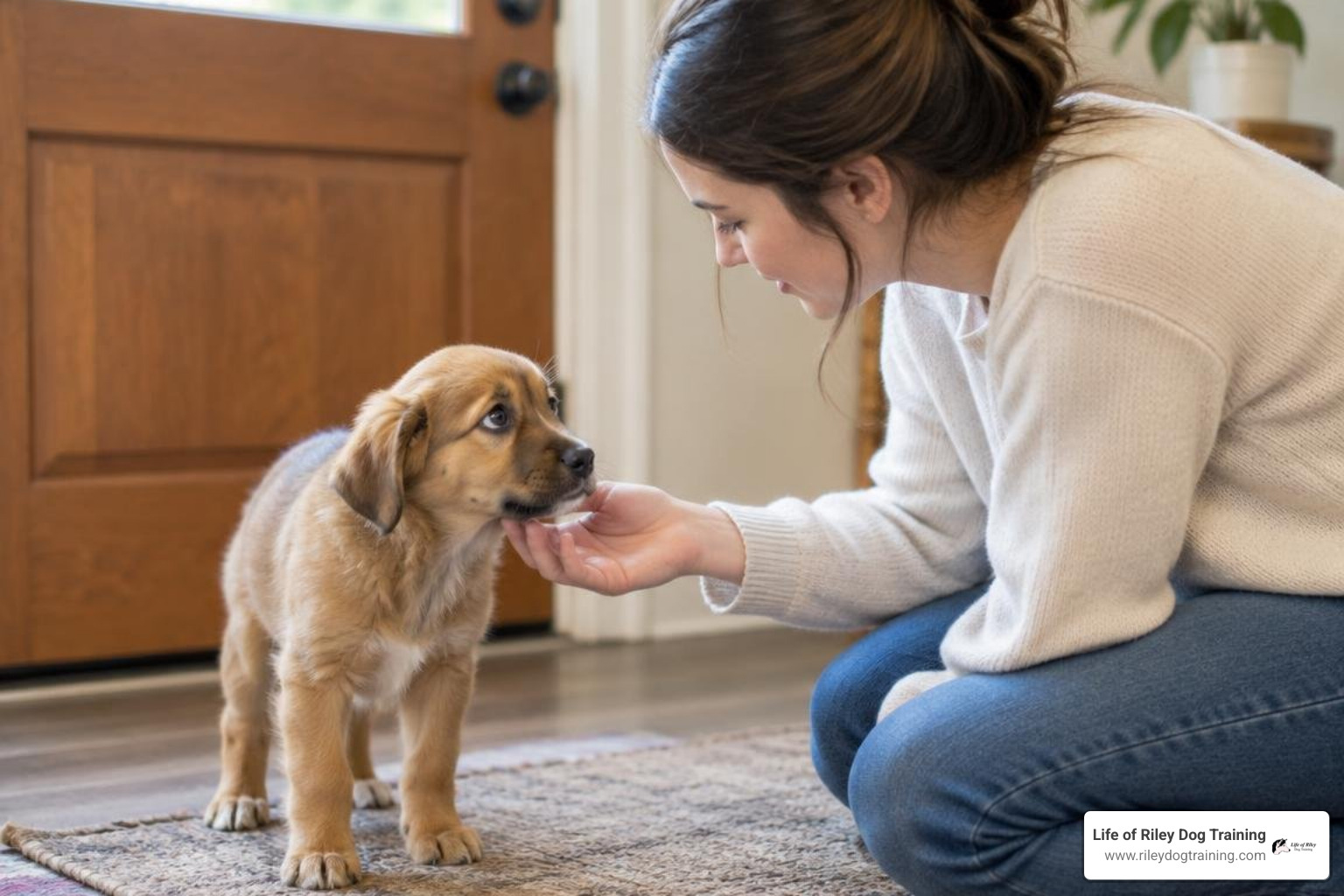
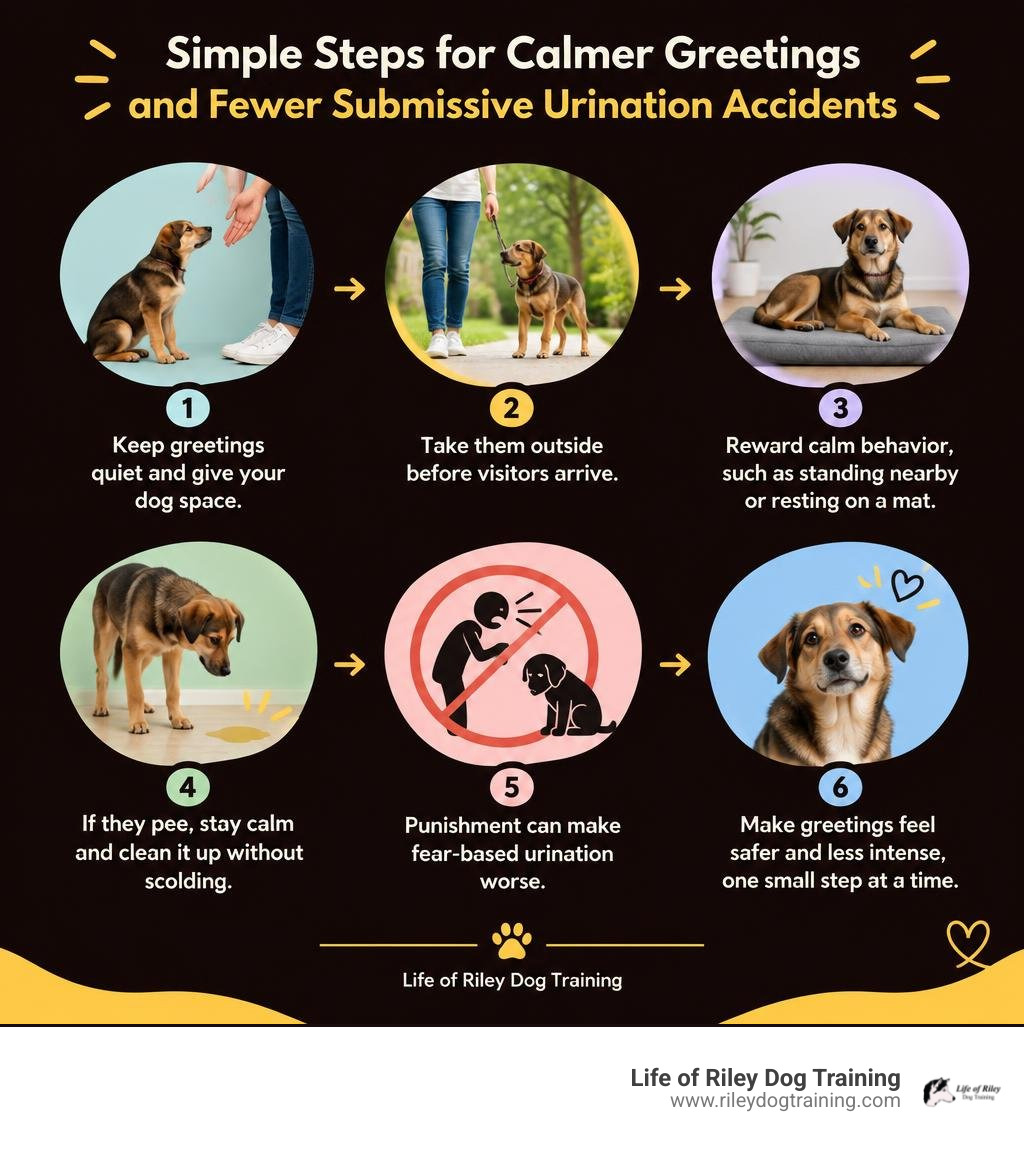
Keep greetings quiet, give your dog space, and let them approach you first. Take them outside before visitors arrive. Then reward calm behavior, such as standing nearby or resting on a mat. If they pee, stay calm and clean it up without scolding. Punishment can make fear-based urination worse.
A puppy who pees when someone reaches toward them is not being stubborn or forgetting their housetraining. They may feel unsure. Some dogs also pee when they are excited, and the two responses can overlap. The goal is to make greetings feel safer and less intense, one small step at time.
Understanding Involuntary Peeing: Submissive vs. Excitement Urination
When you find a puddle near the front door, it is easy to assume your pup had a setback in potty training. Involuntary urination is not a housebreaking failure. It is an instinctive, physiological reaction driven by overwhelming emotion. To solve the issue, we first have to understand the emotional mechanics behind what your dog is feeling.
Submissive urination is an involuntary appeasement gesture. In the canine world, releasing a small amount of urine communicates social deference. Your dog is essentially saying, "I acknowledge you are in charge, and I mean no harm." When a sensitive dog feels intimidated, overwhelmed, or socially conflicted, their nervous system overrides their conscious bladder sphincter control.
Excitement urination, while visually similar, comes from a different emotional state. It happens when a dog is overcome with pure enthusiasm, often during exuberant reunions or high-energy playtime. The pup simply cannot hold their bladder while their arousal levels spike.
Understanding whether your dog is acting out of social appeasement, excitement, or a blend of both helps tailor your approach. For deeper insights into these emotional states, you can review the veterinary guide to submissive and excitement urination.
| Feature | Submissive Urination | Excitement Urination |
|---|---|---|
| Primary Emotion | Insecurity, fear, appeasement, social conflict | Over-arousal, pure joy, enthusiastic greeting |
| Postural Cues | Crouching, lowered head, tucked tail, flattened ears | Wiggling, jumping, upright tail, active movement |
| Belly Exposure | Often rolls onto back or exposes groin passively | Rare; stays on feet or bounces around happily |
| Triggers | Direct eye contact, scolding, towering humans, strangers | High-pitched voices, arrival of favorite people, toys |
| Eye Contact | Averted gaze, whale eye, blinking | Direct, eager, bright gaze |
Common Triggers and Vulnerable Dogs
Submissive urination appears most frequently in puppies and young female dogs. Young puppies are still developing physical bladder control and navigating their confidence in a vast world. Anatomically, male dogs have longer urethras, which can offer slightly more physical resistance to involuntary leaks, making young females somewhat more susceptible.
A classic postural sign is inguinal presentation, where a dog rolls onto their side or back to expose their groin area. While many people mistake this posture for an invitation for belly rubs, in a timid dog, it is often a profound appeasement signal asking for social space.
Common triggers that inadvertently spark submissive urination include:
- Looming or bending directly over the dog
- Reaching a hand over the top of the dog's head
- Direct, sustained eye contact
- Deep, stern vocal tones or raised voices
- Quick, unexpected movements by unfamiliar visitors
- Physical crowding in tight spaces like hallways or doorways
Medical vs. Behavioral Urination Causes
Before beginning behavioral work, always consult your veterinarian to eliminate physical ailments. An untreated medical issue can mimic behavioral leaks or increase bladder sensitivity, confusing your training efforts.
Reviewing steps for identifying medical causes for house soiling ensures you do not mistake a physical infection for anxiety. Your veterinarian can check for:
- Urinary Tract Infections (UTIs): Inflammation causes sudden urgency and uncomfortable leakage.
- Ectopic Ureters: A congenital abnormality where the ureters bypass the bladder, common in young female dogs.
- Hormonal Incontinence: Often seen in spayed females due to changes in sphincter muscle tone.
- Polydipsia/Polyuria: Underlying conditions like kidney disease or diabetes that dramatically increase urine production.
If your vet confirms a clean bill of health, you can move forward with confidence using behavioral training.
Immediate Owner Dos and Don'ts: Breaking the Appeasement Cycle
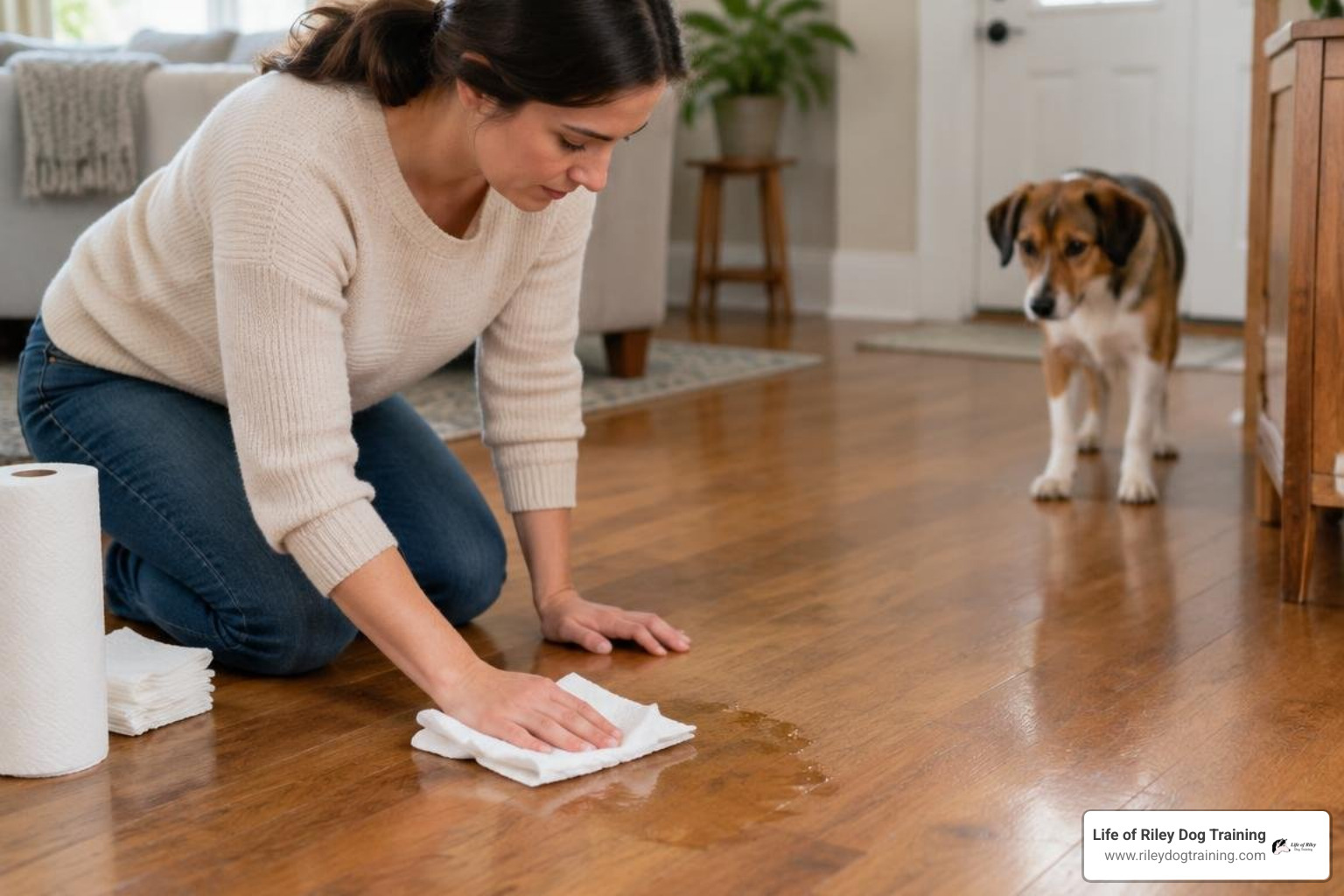
How you react the moment an accident occurs can either resolve the cycle or lock it in place. Because submissive urination is rooted in social appeasement, human frustration actively fuels the fire.
If you sigh, scold, stomp your feet, or use a sharp tone, your dog perceives an increase in social threat. Their instinctual response to a displeased human is to appease even further. Because releasing urine is an involuntary appeasement reflex, reprimanding your dog virtually guarantees they will pee again the next time you approach.
The Golden Rules for Managing Accidents:
- Do not punish or scold: Never yell, push your dog's nose near the puddle, or use physical corrections.
- Do not make sudden comforting movements: Rushing over to soothe an anxious dog with intense hugging can overwhelm them just as much as scolding.
- Stay completely neutral: If an accident happens, calmly step away without making direct eye contact.
- Clean without fanfare: Lead your pup outside or into another room with a gentle toss of treats, then clean the area thoroughly.
- Use an enzymatic cleaner: Standard household soaps leave behind microscopic urine proteins that keep the scent alive to canine noses. Enzymatic formulas break down organic matter completely, removing lingering scent triggers.
Core Techniques: Dog Training for Submissive Urination
Transforming submissive urination requires shifting your dog's emotional state from apprehension to security. We use structured, reward-based exercises that empower your dog to feel in control of their environment. By following a clear, compassionate reward-based training philosophy, you show your dog that greetings are predictable and safe.
Our training focuses on counterconditioning and desensitization. We teach your dog an alternative, incompatible behavior such as targeting a mat or hunting for treats on the floor. A dog who is actively searching for treats or resting on a comfortable station cannot easily drop into an appeasing crouch.
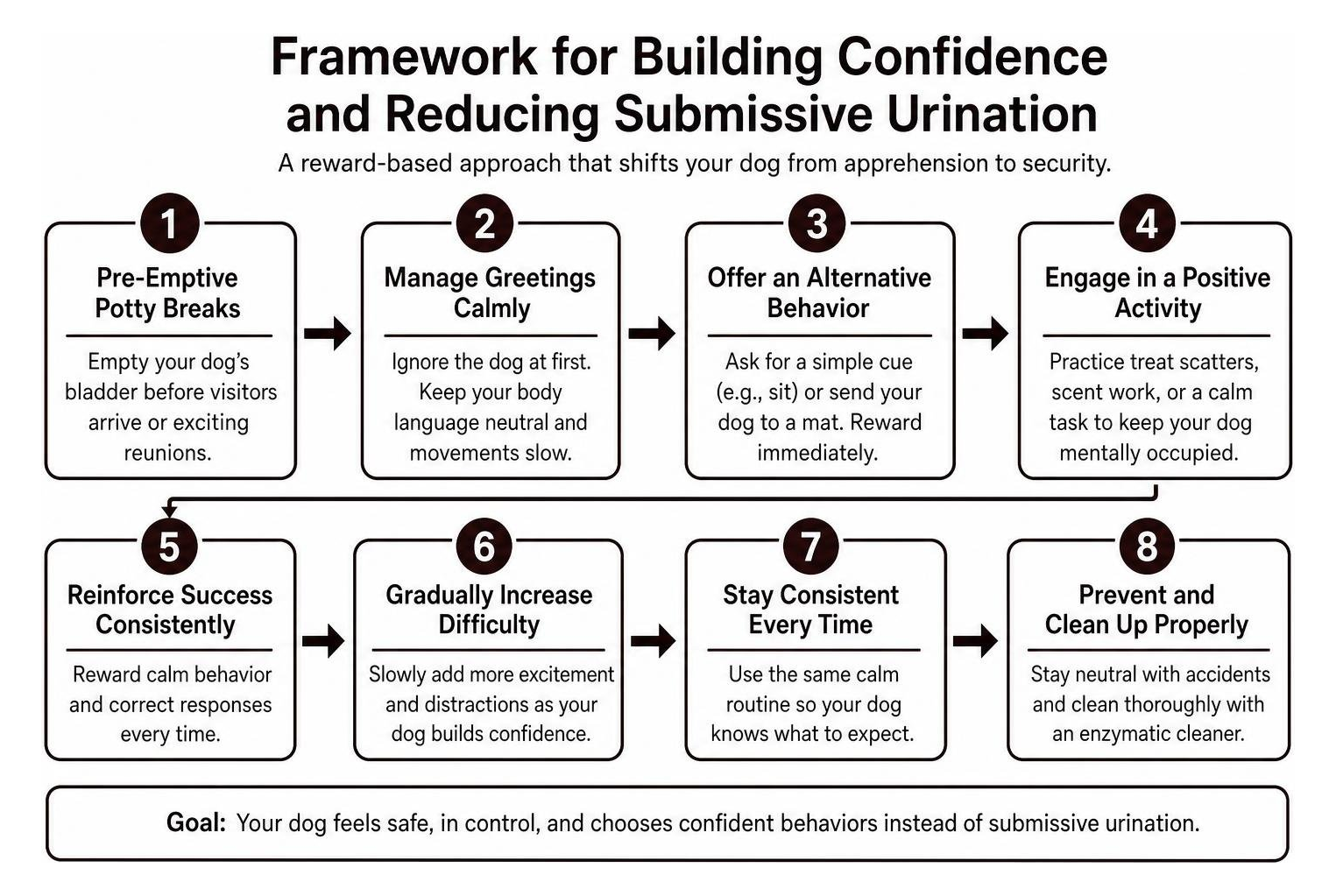
Step-by-Step Dog Training for Submissive Urination During Greetings
Implementing a structured routine transforms chaotic greeting times into calm, low-stress interactions. Here is the step-by-step protocol we recommend:
- Pre-Emptive Potty Breaks: Always empty your dog's bladder before visitors arrive or before you anticipate an exciting reunion. A dog with an empty bladder has a much harder time leaving a puddle.
- The "Treat Scatter" Greeting: When entering your home, avoid bending down to touch your dog. Instead, gently toss a handful of high-value treats (like small bits of baked chicken or freeze-dried meat) across the floor away from your feet. This redirects their focus downward into a foraging behavior, which naturally lowers heart rates and diffuses social tension.
- Teach the "Go to Mat" Cue: Train your dog to target a designated bed or mat positioned away from the front door. Reward them for lying down calmly on this station. When someone enters, the dog focuses on earning rewards at their station rather than facing an overwhelming face-to-face greeting at the doorway.
- Sideways Body Positioning: Always stand with your side turned toward the dog rather than squaring your shoulders directly at them. Sideways posture is non-confrontational in canine body language.
- Gradual Threshold Exposure: Practice greeting drills in micro-steps. Start with calm family members before advancing to unfamiliar guests, keeping every session brief and rewarding.
Modifying Human Body Language and Visitor Protocols
Human social norms are often the polar opposite of polite canine etiquette. Humans like to lean in, hug, make eye contact, and reach directly over heads. To an anxious pup, these gestures look like an assertive physical display.
Educate your family and guests on these simple body language adjustments:
- Ignore on Arrival: Instruct guests to completely ignore your dog for the first five minutes. No looking, no talking, and no touching.
- Let the Dog Choose: Allow the dog to approach guests on their own terms rather than letting guests march up to the dog.
- Side and Chest Strokes Only: If petting occurs, keep hands below the dog's chin level. Gently scratch the chest or side of the neck. Never reach down over the crown of their head.
- Soft, Conversational Tones: Avoid high-pitched squealing or booming loud greetings. Keep your voice quiet, smooth, and relaxed.
Environmental Management, Calming Aids, and Medical Support
While behavior modification reshapes your dog's mindset over time, day-to-day management protects your living space and keeps human stress levels low.
Helpful supportive tools include:
- Synthetic Pheromones: Products like Adaptil mimic the appeasing pheromones released by mother dogs, helping soothe situational stress in entryways and main living areas.
- Dog Diapers and Belly Bands: If you are visiting family or working through an intense training phase, you can look into using dog diapers and belly bands safely. These tools protect your carpets while you train, provided they are fitted properly and changed promptly to protect skin health.
- Consistent Daily Schedules: Predictable meal times, walk times, and quiet periods help stabilize an insecure dog's nervous system.
- Medical Sphincter Support: For refractory cases where a dog has persistent physical weakness in their urinary sphincter alongside anxiety, veterinarians can prescribe medications like phenylpropanolamine (PPA) to increase bladder tone while you work on behavioral therapy.
When to Seek Professional Dog Training for Submissive Urination
While many puppies improve with patient guidance, some dogs require specialized intervention. Adult rescue dogs with unknown histories, dogs displaying profound generalized anxiety, or pups who show zero progress after weeks of home management benefit greatly from customized support.
Our team at Life of Riley Dog Training specializes in positive, gentle behavior solutions tailored to your home environment. If you live in Northwest Indiana or Southwest Michigan, including communities like Chesterton, Valparaiso, Michigan City, or St. Joseph, our in-home day training lessons allow us to work directly with your dog in the exact spaces where greeting accidents happen. For families outside our direct travel radius, our virtual dogs eye view lessons provide personalized, real-time coaching right through your screen.
Frequently Asked Questions About Submissive Urination
How long does it take to stop submissive urination in dogs?
Progress depends on your dog's age, baseline anxiety, and the consistency of everyone in the household. Puppies who receive patient, low-key handling often show significant improvement within two to four weeks. Adult dogs or rescues with deep-seated fears may require several months of steady confidence-building exercises to completely resolve involuntary leaks.
Will my puppy naturally grow out of submissive urination?
Many young puppies do naturally outgrow the issue as their urinary sphincter muscles mature and their confidence blossoms around sexual and social maturity. Relying entirely on age is risky. If a puppy is continually scolded or exposed to scary greetings, the submissive response can become an ingrained habit that persists well into adulthood. Active confidence building ensures they truly leave the behavior behind.
Should I use diapers or belly bands while training?
Diapers and belly bands are excellent temporary management tools to reduce cleanup stress and protect your home furnishings. They should never be treated as a permanent replacement for training or medical evaluation. Always use breathable materials, ensure a snug but comfortable fit that allows a finger beneath the band, and remove them promptly after greetings to keep your dog's skin healthy and dry.
Guiding Your Dog Toward Confident Greetings
Watching your dog struggle with involuntary urination can feel overwhelming, but patience, empathy, and gentle structure make all the difference. When we replace frustration with understanding and adjust our body language to meet our dogs where they are, we remove the fear that triggers the appeasement response. Every calm, puddle-free greeting is a quiet celebration of your dog's growing self-assurance.
If you ever need an experienced, caring partner to help you navigate this journey, we are always here to help. Reach out to our compassionate team for personalized positive dog training support and help your companion build the joyful confidence they deserve.