
Why a 5 Month Old Puppy Pulls on Leash and How to Understand It

To stop a 5 month old puppy from pulling on leash, start with a front-clip harness, halt all forward progress the moment the leash tightens, and generously reward your puppy for walking beside your hip with slack in the line. This simple combination addresses the root causes of pulling while teaching your puppy that calm, attentive walking earns the best rewards.
Many owners find that a 5 month old puppy pulls on leash simply because walking together can feel like holding onto a tiny sled dog. Before we can change this habit, we need to understand what is happening inside your puppy's brain and body.
Pulling on the lead is remarkably common. In the Royal Veterinary College's Pandemic Puppies cohort, 67.4% of owners reported leash pulling as a problem behavior by 21 months of age. Furthermore, Dogs Trust's National Dog Survey revealed that 44% of owners named lead pulling among their top behavioral challenges.
Your puppy is not trying to dominate you or be stubborn. Instead, their natural curiosity, physical mechanics, and high emotional arousal create a perfect storm for leash tension.
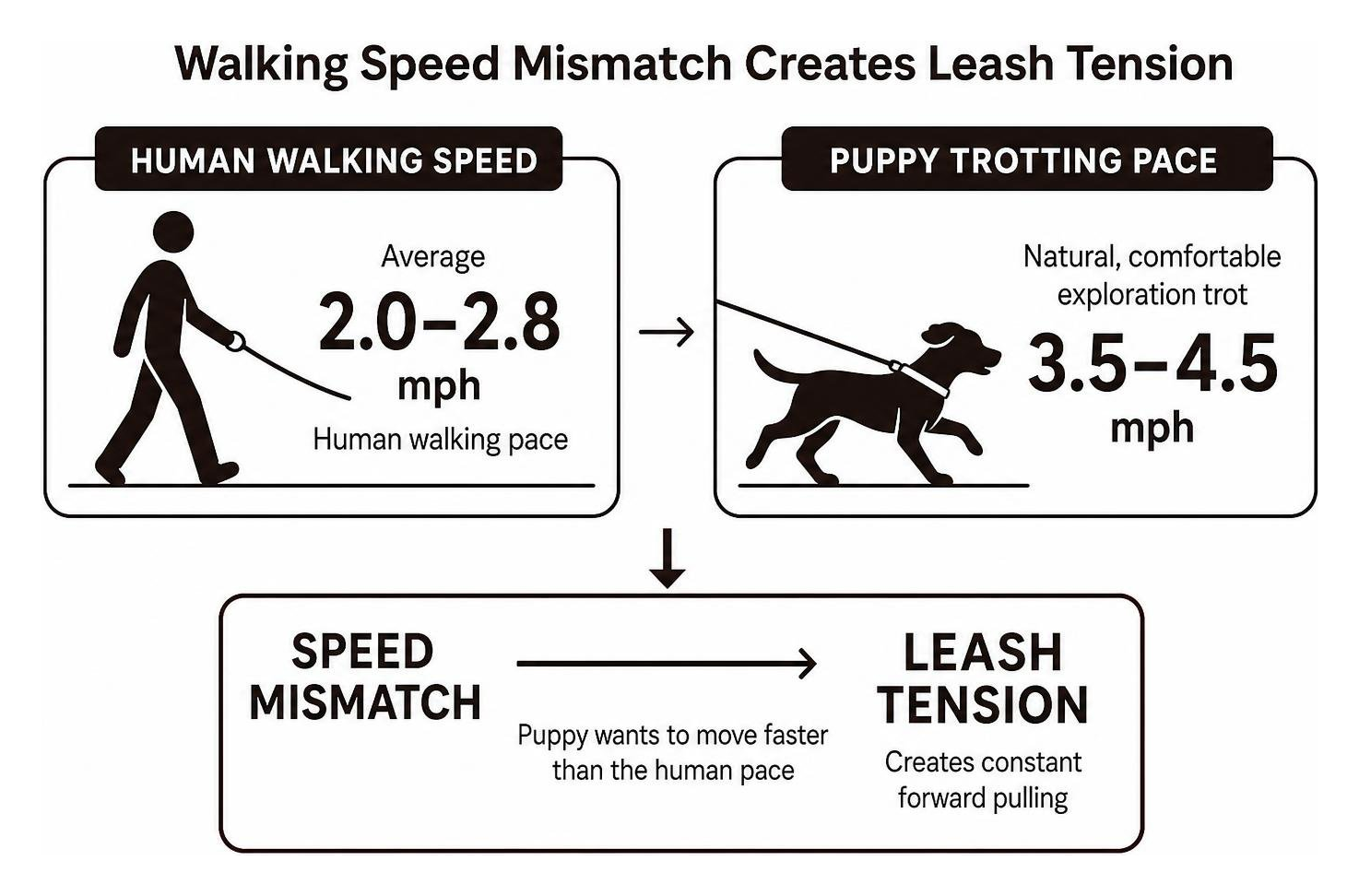
The Opposition Reflex and Natural Walking Speed Mismatch
Two physiological factors drive forward pulling:
- The Opposition Reflex: When a dog feels tactile pressure against their neck or chest, their instinctive neurological reaction is to lean into that pressure rather than back away from it. When the leash tightens, your pup naturally braces their legs and digs in deeper.
- Speed Discrepancy: The average human walking speed is between 2.0 and 2.8 mph. A young puppy's natural, comfortable exploration trot sits between 3.5 and 4.5 mph. You are simply moving at a snail's pace compared to their biological rhythm.
Accidental Reinforcement and Environmental Overstimulation
At five months old, puppies enter early adolescence. Their senses are sharp, and their impulse control is still developing. Every outdoor walk presents a flood of scents, sights, and sounds.
When your puppy strains toward a fire hydrant and you take two steps forward to keep up, their brain registers a massive win. Pulling worked because it delivered the reward of forward momentum and exciting smells. Over hundreds of repetitions, this creates a deeply ingrained habit loop. When you add trigger stacking from passing cars and neighborhood noises, your puppy quickly becomes overstimulated and loses the ability to focus.
Equipment Essentials: Choosing the Right Walking Gear
The tools you attach to your puppy can either accelerate their learning or make walks physically exhausting and dangerous. According to data published in JAMA Surgery, fractures associated with walking leashed dogs among older adults rose from 1,671 in 2004 to 4,396 in 2017. Proper equipment protects both your physical safety and your puppy's delicate anatomy.
| Equipment Type | Primary Function | Trachea Safety | Pulling Reduction | Recommended Use |
|---|---|---|---|---|
| Flat Collar | Holds ID tags and licenses | Low (can strain neck if pulling) | None | Best for tags or dogs that already walk on a slack line |
| Back-Clip Harness | Distributes chest pressure | High | Low (can trigger opposition reflex) | Great for running or decompression walks on long lines |
| Front-Clip Harness | Redirects forward momentum | High | High (up to 98% reduction) | Ideal foundation tool for puppies learning loose-leash skills |
| Head Halter | Guides head orientation | High (if used gently) | Very High | Helpful for large, powerful pullers under careful conditioning |
You can learn more about finding the right setup by reviewing resources on how to Stop a Dog From Pulling on Leash.
Front-Clip Harnesses vs. Standard Collars
A standard flat collar places concentrated pressure directly against your puppy's trachea and cervical spine when they strain forward. This can cause coughing, gagging, and long-term airway irritation.
A Y-shaped front-clip harness changes the mechanical leverage. When your puppy surges forward, the leash attachment at the center of the chest gently redirects their shoulders back toward you. Data from the San Diego Humane Society indicates that a front-clip harness can reduce pulling on its own by up to 98%. It gives you physical control without applying painful pressure to the neck.
Why Retractable Leashes and Punitive Collars Cause Harm
Retractable leashes actively train dogs to pull. Because the thin cord maintains constant, light tension, the puppy learns that keeping tension on the line is required to move forward. The locking mechanisms can also snap, and the thin cords pose severe friction-burn risks.
Punitive tools such as prong collars, choke chains, and electronic collars introduce pain and fear into what should be an enjoyable bonding activity. A study by Vieira de Castro and colleagues showed that dogs trained with aversive methods had a significantly higher post-training rise in salivary cortisol (0.11 µg/dL) compared to reward-trained dogs (0.02 µg/dL). Pain creates negative associations with the surrounding environment, often transforming simple excitement into fear-based reactivity. This is why our philosophy for dog training relies entirely on force-free, humane techniques that build confidence and trust.
Core Positive Training Methods for Loose-Leash Walking
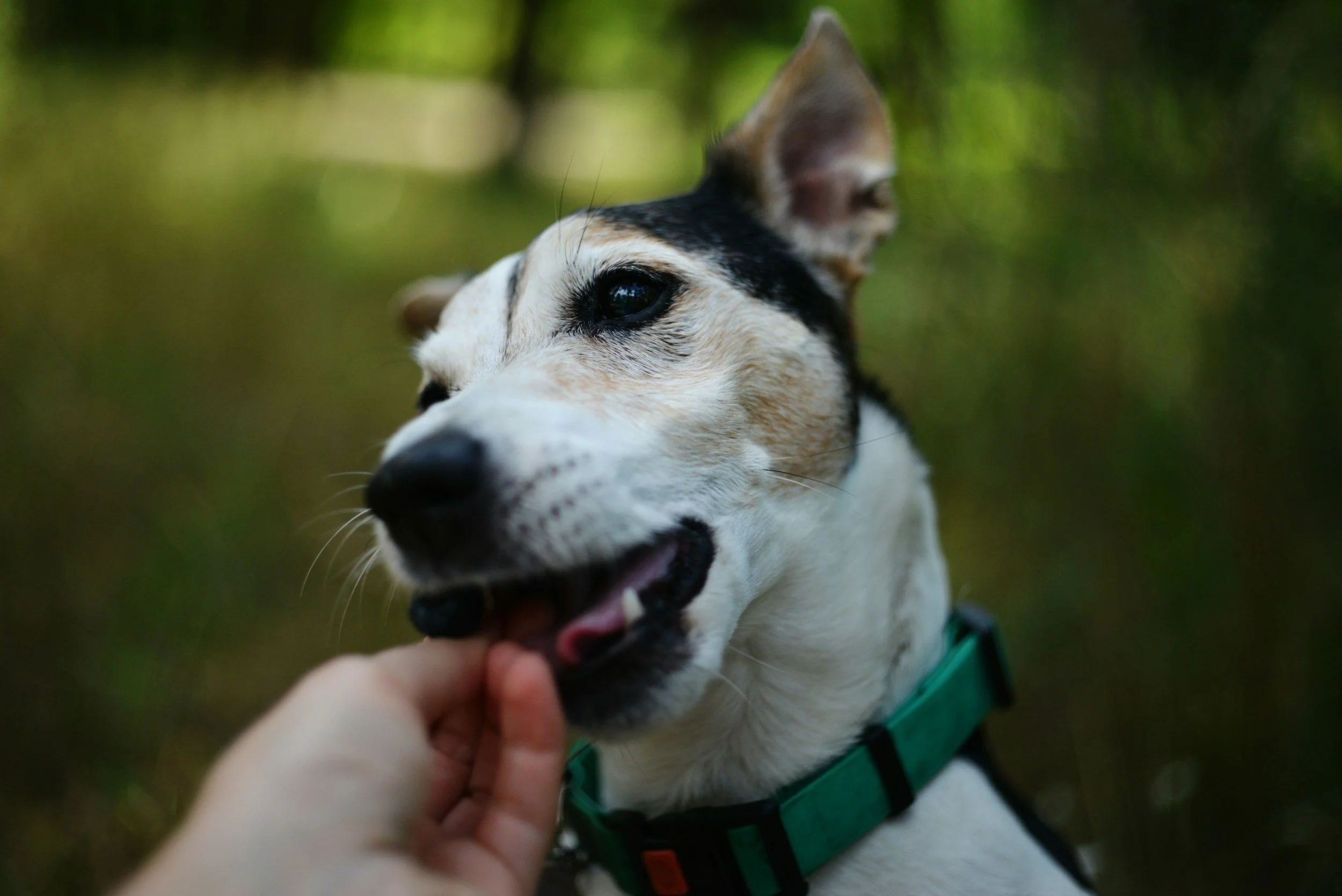
Teaching a puppy to walk nicely requires proactive reinforcement. Instead of waiting for your puppy to make a mistake and correcting them, we want to catch them doing things right and pay them generously.
The Stop-and-Wait Technique: Halting Forward Progress
The stop-and-wait method is your primary tool for breaking the connection between pulling and forward movement.
- Plant your feet: The second you feel the leash go taut, stop moving immediately. Become a stationary tree.
- Hold steady: Do not yank or jerk the leash backward. Simply anchor your hands against your core and wait.
- Wait for slack: Look for your puppy to release the tension. They might take a step back, turn their head, or sit down.
- Mark and reward: The instant the leash creates a soft "J" shape, use a verbal marker like "yes!" and deliver a small, high-value treat right beside your pant seam.
- Resume walking: Take a few steps forward. Repeat this process every single time the line tightens.
Direction Changes: Regaining Focus with Unpredictable Turns
If your puppy is highly motivated and tries to plow straight ahead despite your stops, introduce gentle direction changes to reset their attention.
When your puppy charges forward, turn smoothly 180 degrees and walk in the opposite direction without jerking the line. Say something cheerful like "this way!" as you pivot. As your puppy turns to catch up with you and enters your side zone, mark with "yes!" and reward them generously.
This unpredictable movement teaches your puppy that you are the navigator. To keep up with the walk, they must pay attention to your body language rather than fixating solely on the horizon.

The Magnet Game and Establishing the High-Value Reward Zone
The "reward zone" is the imaginary pocket of space right next to your leg, aligned with your pant seam. The Magnet Game teaches your puppy that walking in this zone is the most lucrative activity in the world.
Start indoors or in a quiet backyard without a leash:
- Hold tiny pieces of real meat or cheese in the hand closest to your puppy.
- Walk forward at a brisk, engaging pace.
- Deliver a treat directly to your puppy's mouth at your hip seam every two or three steps.
- Once your puppy sticks to your leg like a magnet, clip on their standard six-foot leash and practice the exact same rapid pay rate.
Handling High Distractions When a 5 Month Old Puppy Pulls on Leash
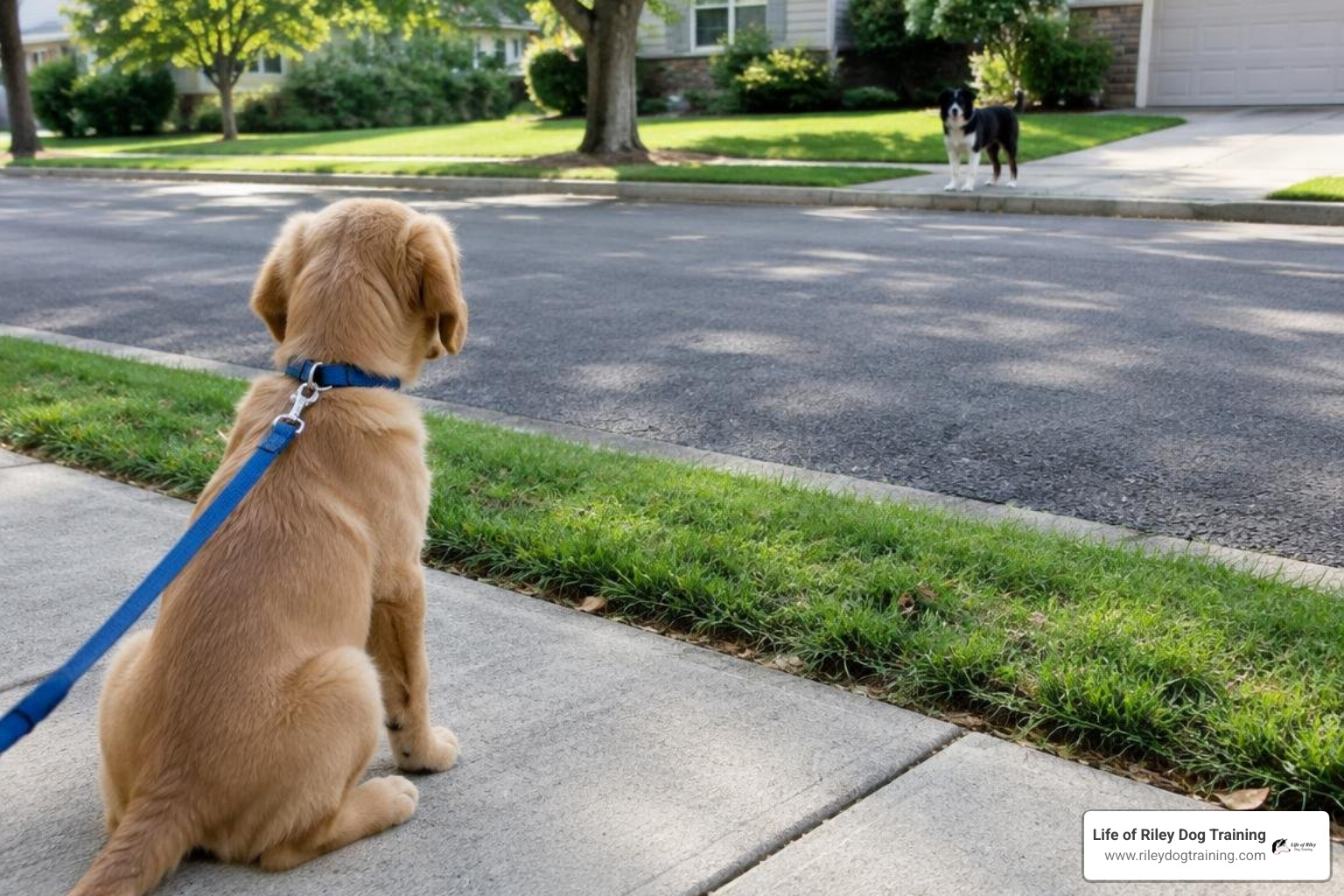
A puppy who walks like a champion inside your living room may suddenly turn into a pulling machine when they step onto a busy sidewalk. This happens because the outdoor world is full of competing motivators.
Managing Reactivity Around Other Dogs and Novel Triggers
When your puppy spots another dog, a scampering squirrel, or a friendly neighbor, their emotional arousal spikes. If they pull and lunge, they have crossed their mental threshold.
To help them succeed:
- Maintain a Safety Buffer: Cross the street or step onto a driveway to give your puppy the physical space they need to think.
- Practice the Three-Second Rule: Let your puppy look at a distraction for one or two seconds, say their name, and reward them when they turn their head back toward you.
- Incorporate Sniff Breaks: Sniffing lowers a dog's heart rate and calms their nervous system. Use structured sniff breaks as a life reward for walking nicely on a loose lead.
If your pup struggles with intense neighborhood arousal, structured guidance through comprehensive dog training programs can help you build rock-solid focus around heavy distractions.
Solving Leash Biting and Mid-Walk Frustration Tantrums
Many five-month-old puppies occasionally grab the leash with their teeth, growling and playing tug-of-war in the middle of a walk. This behavior is rarely about aggression. Instead, it is usually a sign of emotional overstimulation or fatigue.
When leash biting happens:
- Drop the tension: Do not pull back, as pulling back turns the leash into an exciting tug toy.
- Redirect with a toy: Carry a soft fleece tug toy or squeaker ball in your pocket. Offer the toy as an appropriate outlet for their mouthy energy.
- Shorten the outing: If your puppy consistently bites the leash near the end of your walks, it means their growing brain has reached cognitive exhaustion. Cut your walking time in half to keep experiences positive.
Training Timeline, Daily Expectations, and Common Mistakes
Transforming a persistent puller into a relaxed walking partner takes patience and steady practice. Puppies do not generalize skills instantly, so progress happens in clear stages.
Training Timeline: What to Expect When a 5 Month Old Puppy Pulls on Leash
- Weeks 1 to 2: Your puppy begins to understand that tension stops movement. You will experience frequent stops, but you will notice regular eye contact and check-ins in low-distraction environments like your hallway or backyard.
- Weeks 3 to 4: You can walk down quiet residential streets with a loose leash for short stretches. Your puppy recovers quickly from minor distractions when you use your marker cue.
- Weeks 5 to 6 and Beyond: Loose-leash walking becomes their default habit on familiar neighborhood routes. You can gradually introduce busier parks while maintaining connection.
If you want hands-on support to build these habits quickly, personalized in-home day training lessons provide customized routines right in your neighborhood.
Critical Mistakes to Avoid During Everyday Outings
- Going on Marathon Walks: Long walks lead to physical and mental fatigue, causing puppies to pull out of frustration. Keep training walks to 10 or 15 focused minutes.
- Inconsistent Rules Among Walkers: If one family member lets the puppy pull to greet neighbors while another enforces a slack line, the puppy learns on an intermittent reward schedule, making pulling harder to extinguish.
- Delivering Rewards Out in Front: If you hand treats to your puppy while they are out in front of you, you are accidentally rewarding them for forging ahead. Always deliver food right at your hip seam.
- Advancing to Busy Places Too Soon: Practicing on a bustling downtown street before mastering the quiet driveway sets your puppy up for failure. Build your foundation step by step.
Frequently Asked Questions About Leash Training
What treats work best when leash training an easily distracted puppy?
Standard dry kibble rarely competes with the fascinating scents of the outdoor world. Use soft, high-value rewards cut into pea-sized bites so your puppy can swallow them instantly without stopping to chew. Real boiled chicken, string cheese, freeze-dried beef liver, and plain hot dog slices work wonderfully. Keep them stored in an accessible treat pouch on your hip for rapid delivery.
What should I do if my puppy freezes or refuses to walk entirely?
A puppy that plants their paws like a statue is usually feeling overwhelmed, cautious, or unsure about unfamiliar sights or equipment. Never drag a frozen puppy. Instead, turn sideways to reduce social pressure, kneel down, and encourage them forward with an upbeat voice and a high-value treat. If they seem genuinely frightened, decrease the environmental challenge and let them observe the world from a comfortable distance.
When should I seek professional help for persistent pulling?
If your puppy lunges aggressively, barks inconsolably at basic triggers, or pulls with enough force to compromise your physical balance, professional guidance is essential. Working with an experienced professional helps you identify underlying triggers and establish safe handling mechanics. For owners who prefer remote coaching or live outside our local service areas, our virtual dog training sessions provide clear, personalized behavior plans from the comfort of your home.
Small Steps Toward Peaceful Puppy Walks
Teaching your puppy to walk on a loose lead is one of the greatest gifts you can give your household. While it requires patience and steady commitment during these curious adolescent months, every peaceful walk you share deepens your bond. Celebrate the small victories, stay consistent with your boundaries, and enjoy watching your pup blossom into a polite walking companion.
If you ever need an extra hand, Life of Riley Dog Training is here to help you transform frustrating walks into joyful adventures with personalized coaching and lifelong support.